Tag: Workout

Top 3 Best Tricep Exercises | Science Based

When it comes to building strong, defined triceps, everyone seems to have their favourite tricep exercises. Personally, I’m a huge fan of movements that hit all parts of the muscle—triceps push-ups, dips, and triceps kickbacks are some of the best in my book. Each of these tricep exercises is backed by science and effective at engaging the muscle in different ways, helping you develop strength, size, and definition.

What Are the Triceps?

The triceps brachii, or simply “triceps,” is the large muscle located on the back of your upper arm. It plays a critical role in arm extension, helping you straighten your elbow and perform pushing movements. Understanding the anatomy of this muscle can help you pick and understand tricep exercises better. The triceps consist of three distinct parts:

Long Head

The long head originates from the scapula (shoulder blade) and spans across the shoulder and elbow joints. This part is responsible for arm extension and shoulder stabilization. It contributes to the bulk of the upper arm, particularly when viewed from the side.

Lateral Head

The lateral head is located on the outer side of the upper arm. It is highly active during heavy pressing movements and gives the triceps its characteristic “horseshoe” shape.

Medial Head

The medial head lies beneath the other two and is positioned closer to the inner arm. Though less visible, it plays a crucial role in overall arm stability and endurance during repetitive movements.

How to Target a Specific Part of the Triceps

Targeting specific parts of the triceps with exercises—the long head, lateral head, or medial head—comes down to arm and elbow positioning. Each variation emphasizes different portions of the muscle, allowing for focused development.

Arm Position

Exercises with the arms overhead, such as overhead triceps extensions, stretch and engage the long head more because of its connection to the scapula. This creates a greater range of motion for this portion of the muscle.

Elbow Positioning

Keeping the elbows close to the torso during movements like triceps pushdowns emphasizes the medial head. In contrast, flaring the elbows slightly outward during pressing exercises shifts more effort to the lateral head, which is highly activated during heavy, compound movements.

Top 3 Best Science-Based Triceps Exercises

When it comes to building strong, defined triceps, science can help guide your efforts. The American Council on Exercise (ACE) conducted a study to determine which triceps exercises are the most effective. Their research used electromyography (EMG) to measure muscle activation, revealing the top three exercises for targeting the triceps: triceps push-ups, dips, and triceps kickbacks. Here’s a detailed breakdown of these exercises, including how to perform them, the benefits, and which part of the triceps they work.

1. Triceps Push-Ups

Triceps Push-Ups Exercise

How to Perform:

  1. Start in a high plank position with your hands directly under your shoulders.
  2. Keep your body in a straight line from head to heels.
  3. Lower yourself toward the floor, keeping your elbows close to your body.
  4. Push back up to the starting position, maintaining core engagement throughout.

Benefits:

Triceps push-ups are a powerhouse for building strength because they rely solely on your body weight. This exercise also improves core stability and upper body strength while keeping the shoulder joint stable.

Muscle Focus:

By keeping your elbows tucked in, this triceps exercise primarily targets the medial and lateral heads of the triceps, ensuring balanced development.

2. Triceps Dips
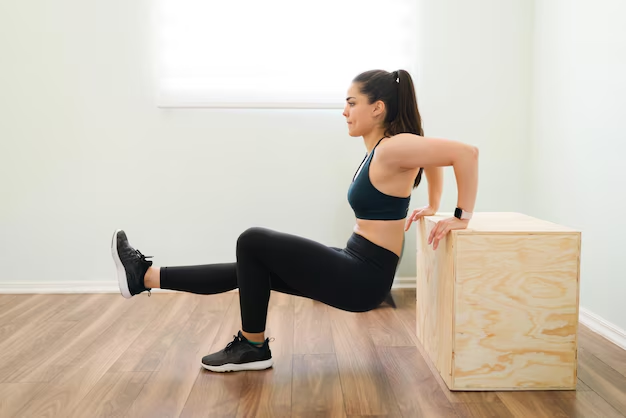
Triceps Dips Exercise

How to Perform:

  1. Use parallel bars, a sturdy bench, or even the edge of a couch for support.
  2. Place your hands shoulder-width apart and extend your legs out in front of you.
  3. Lower your body by bending your elbows to about a 90-degree angle.
  4. Push back up, fully extending your arms without locking the elbows.

Benefits:

Tricep Dips are a compound movement that not only isolates the triceps but also engages your chest and shoulders. They are versatile, requiring minimal equipment, and are excellent for building overall upper body strength.

Muscle Focus:

Dips work the long head of the triceps more effectively than most other exercises due to the overhead position of the arms, which stretches this portion of the muscle.

3. Triceps Kickbacks

Triceps Kickbacks Exercise

How to Perform:

  1. Hold a dumbbell in one hand and bend forward at the hips, keeping your back flat.
  2. Bend your elbow to 90 degrees, with your upper arm close to your torso.
  3. Extend your arm straight back, squeezing the triceps at the top.
  4. Slowly return to the starting position and repeat.

Benefits:

Triceps kickbacks are a highly effective isolation exercise. They target the triceps directly, making them ideal for fine-tuning definition and symmetry. You can easily adjust the weight to match your fitness level, making it suitable for beginners and advanced lifters alike.

Muscle Focus:

Kickbacks emphasize the lateral head of the triceps, helping create the coveted “horseshoe” shape that signifies well-developed arms.

How to Structure your Triceps Workout

Structuring a triceps workout effectively ensures balanced development and maximizes muscle activation. Start with compound exercises, like dips or close-grip bench presses, as these recruit the most muscle fibers and allow you to lift heavier weights when your energy is highest. Afterward, move to isolation exercises, like triceps pushdowns or kickbacks, to target specific parts of the muscle with precision.

Common mistakes with tricep exercises include overloading on isolation movements early in the session, which can exhaust smaller muscle fibers and limit your performance in compound exercises. Another pitfall is neglecting rest and recovery between sets; triceps are smaller muscles and need proper rest to sustain effort.

For the best results, aim for a mix of overhead movements (for the long head), pressing motions (for the lateral head), and close-grip exercises (for the medial head). Rotating these variations ensures well-rounded development and reduces the risk of overuse injuries.

3 Reasons Why you Should Focus on your Triceps

Training your triceps is essential for several reasons, whether you’re a casual gym-goer or a serious lifter.

Firstly, the triceps make up a significant portion of your upper arm. By training with the triceps exercises we mentioned above, you’ll improve overall arm size and definition, creating a more balanced and aesthetically pleasing physique. Strong triceps are key to achieving that “toned” look that many aim for.

Secondly, developing strong triceps betters your pushing power. The triceps are involved in almost every pressing movement, from push-ups to bench presses. A well-trained tricep improves performance in these exercises, helping you lift more weight and making other upper-body exercises more effective.

Lastly, strong triceps contribute to functional strength. Whether you’re pushing a heavy door, lifting boxes, or performing sports-related movements, having strong triceps improves your everyday ability to perform pushing motions with ease and reduces the risk of injury.

FAQ

Which tricep exercise is most effective?

The most effective triceps exercise depends on your goals. However, dips and close-grip bench presses are often considered top choices due to their ability to target multiple heads of the triceps with heavy resistance.

How do you hit all three tricep heads?

To target all three heads of the triceps, incorporate a variety of movements. Overhead exercises like triceps extensions hit the long head, while close-grip presses and dips focus on the lateral and medial heads. A well-rounded routine ensures balanced development.

Are 3 exercises enough for triceps?

Yes, three exercises can be enough, especially if they vary in movement patterns. For example, combining a compound movement (like dips), an overhead exercise (like triceps extensions), and an isolation movement (like pushdowns) can target all areas effectively.

How can I tone my triceps fast?

To tone the muscle quickly, focus on progressive overload—gradually increasing the weight or reps of the tricep exercises we mentioned. Consistency, along with a balanced diet and overall fat loss, will reveal leaner, more defined triceps over time.

Strength Programs >>

More Articles >>

Personalized Fitness Plans | How Your DNA Can Lead to Effective Weight Loss

Are you tired of trying every diet and workout plan under the sun, only to find yourself back at square one? Well, buckle up because we’re about to embark on a journey that will change the way you approach weight loss forever. Imagine a world where your fitness plan is tailored specifically to your body’s unique needs, based on the very essence of who you are – your DNA! Sounds like science fiction, right? But it’s not. It’s the future of weight loss, and it’s here now.

The Power of Personalized Training Plans

Imagine you walk into a gym, and instead of being handed a generic workout plan, you’re given a personalized blueprint that takes into account your genetic makeup. No more guessing games, no more trial and error. Just a clear path to achieving your weight loss goals, based on the specific way your body responds to exercise and nutrition.

That’s where personalized training plans come in. By analyzing your DNA, experts can determine the best types of exercise for your body, the ideal intensity and duration of your workouts, and even the optimal time of day to exercise. It’s like having a personal trainer who knows your body better than you do!

But it’s not just about exercise. Your DNA can also reveal important information about your body’s nutritional needs. Imagine knowing exactly which foods to eat and which to avoid, based on your genetic predisposition to certain health conditions. No more one-size-fits-all diets that leave you feeling deprived and unsatisfied.

The Science Behind DNA-Based Fitness

So, how exactly does DNA testing work for fitness? It all starts with a simple cheek swab or saliva sample. From there, scientists analyze your DNA to identify specific genetic markers that can influence your body’s response to exercise and nutrition.

For example, some people have a genetic variation that makes them more responsive to endurance training, while others may benefit more from high-intensity interval training. Similarly, certain genetic markers can indicate a higher risk for certain nutrient deficiencies or food intolerances.

By understanding these genetic factors, experts can create personalized training plans that optimize your body’s natural strengths and minimize its weaknesses. It’s a scientific approach to fitness that takes the guesswork out of the equation.

Getting Started with DNA-Based Fitness

Now, you might be thinking, “That sounds great, but how do I get started?” Well, that’s where companies like GENEFIT come in. They offer cutting-edge DNA testing and analysis, along with personalized training plans based on your unique genetic profile. It’s like having a team of experts in your corner, guiding you every step of the way.

But even if you’re not ready to take the plunge with DNA testing, there are still plenty of ways to incorporate personalization into your fitness routine. Start by paying attention to how your body responds to different types of exercise and nutrition. Keep a journal to track your progress and make note of what works and what doesn’t.

And don’t be afraid to experiment! Try new workouts, new foods, and new approaches to see what feels best for your body. Remember, there’s no one-size-fits-all approach to fitness – it’s all about finding what works for you.

The Future of Personalized Fitness

As technology continues to advance, the possibilities for personalized fitness are endless. From wearable devices that track your every move to virtual reality workouts that transport you to exotic locations, the future of fitness is all about customization.

Imagine a world where your smartwatch not only tracks your steps and heart rate but also analyzes your sweat to determine your hydration levels and nutrient needs. Or where your home gym is equipped with an AI-powered personal trainer that adapts your workouts in real time based on your performance and biometric data.

But perhaps the most exciting development on the horizon is the integration of epigenetics into personalized fitness plans. Epigenetics is the study of how your environment and lifestyle choices can influence the expression of your genes. By understanding these epigenetic factors, experts can create even more targeted and effective fitness plans that not only optimize your weight loss but also promote overall health and longevity.

The Holistic Approach to Personalized Fitness

Of course, it’s important to remember that DNA is just one piece of the puzzle. Your environment, lifestyle, and personal preferences all play a role in your fitness journey. That’s why the most effective personalized training plans take a holistic approach that considers all aspects of your health and well-being.

This means not only optimizing your exercise and nutrition but also addressing factors like stress management, sleep quality, and mental health. By taking a comprehensive approach to fitness, you can create a plan that not only helps you lose weight but also improves your overall quality of life.

Overcoming Obstacles and Staying Motivated

Let’s face it – no matter how personalized your fitness plan may be, there will still be obstacles and challenges along the way. That’s why it’s important to have strategies in place to stay motivated and overcome setbacks.

One effective strategy is to set realistic, achievable goals and celebrate your progress along the way. Instead of fixating on the end result, focus on the small victories – like being able to run an extra mile or choosing a healthy snack over junk food.

Another key to success is finding a support system that keeps you accountable and motivated. Whether it’s a workout buddy, a virtual fitness community, or a personalized coaching program, having people in your corner can make all the difference.

And remember, setbacks are a normal part of the journey. Don’t let one bad day or one missed workout derail your progress. Instead, use it as an opportunity to learn and adjust your plan as needed.

Conclusion

So, what are you waiting for? It’s time to unlock the power of your DNA and start your journey to effective weight loss. With personalized training plans based on your unique genetic profile, you can finally say goodbye to the frustration and guesswork of traditional diets and workout routines. And who knows – you might just discover a whole new level of fitness and vitality that you never knew was possible.

Remember, your DNA is the blueprint for your body’s unique needs and potential. By tapping into that knowledge, you can create a fitness plan that works with your body, not against it. So go ahead, and take the first step toward a healthier, happier you. Your DNA is waiting to guide the way!

But don’t stop there. Embrace the holistic approach to personalized fitness by addressing all aspects of your health and well-being. Surround yourself with a supportive community that keeps you motivated and accountable. And most importantly, never give up on yourself. With perseverance, dedication, and a personalized plan tailored to your unique needs, anything is possible.

The future of fitness is here, and it’s all about you. So what are you waiting for? Let’s get started on your personalized journey to optimal health and wellness. Your DNA is ready to lead the way!

Strength Programs >>

More Articles >>

3 Top Pre-Workout Guide Tips to Follow

Pre-workout rituals are an important part of the fitness journey. Or should we say these are as important as the workouts themselves? It doesn’t matter if you are a regular gym-goer or just starting on your fitness journey, the pre-workout routine can impact your performance. 

Proper pre-workout diet and rituals can also improve your endurance and results, leading to overall fitness and physical well-being. If you don’t know much about pre-workout, don’t worry. We are here to help you out. 

We have compiled this brief guide with tips to explore the key components of an effective pre-workout routine you can easily follow. Keep reading to find out!

The Importance of Pre-Workout Preparation

A well-planned pre-workout routine can provide you with the energy needed to power through intense workout sessions. There are also some pre-workout strategies that can sharpen mental focus and concentration, allowing you to maintain proper form and technique during workouts. 

When you take the right nutrients and hydration before hitting the gym, you are actually contributing to your overall physical performance and endurance in the gym. Along with the proper diet, adequate warm-up and mobility exercises can reduce the risk of injuries during workouts. 

This reduces the risk of injuries during workouts and ensures long-term progress. 

Taking the Right Pre-Workout Supplements 

While not essential, some people may benefit from including pre-workout supplements to improve energy, focus, and performance. There are different types of pre-workout supplements, including caffeine, creatine, and beta-alanine. 

All these supplements have different benefits to contribute towards your fitness journey. For example, a moderate dose of caffeine can increase alertness, improve endurance, and reduce perceived exertion during exercise. 

On the other hand, creatine supplementation has been shown to increase muscle strength, power, and endurance. If you want to use supplements before a workout, we recommend you use natural pre workout from Legion Athletics. This supplement will improve your endurance while protecting you from all types of side effects. 

Ensuring Proper Nutrition 

Proper nutrition before a workout is essential for providing your body with the fuel it needs to perform the best it can. Your aim should be to eat a balanced meal containing carbohydrates, protein, and healthy fats 1-3 hours before your workout. 

This will allow time for proper digestion and nutrient absorption without causing discomfort during exercise. In terms of carbohydrates, you can use whole grains, fruits, and vegetables. 

On the other hand, the best sources of lean protein include chicken, fish, and tofu. These nutrients will support muscle growth and repair. 

Warming-Up and Mobility 

Preparing your muscles and joints for exercise is important both for preventing injuries and improving your performance in the gym. It is advised to include different warm-up exercises and mobility drills in your pre-workout routine. 

This can arm circles, leg swings, hip rotations, and lunges to increase blood flow and loosen up tight muscles. Focus on areas of the body that are commonly tight or prone to injury. This includes the hips, shoulders, and spine. 

Foam rolling, stretching, and mobility drills can also improve flexibility and range of motion to improve your movement quality during workouts.

Conclusion

By following these pre-workout exercises and regimes, you can rest assured that you can avoid every type of injury. Just be sure to take proper diet and follow the right stretching techniques to warm up your muscles and joints, leading to speedy muscle recovery and growth.

Strength Programs >>

More Articles >>

Image by master1305 on Freepik

Is Coffee a Good Pre-Workout Drink?

Would you like to start your day with a hot cup of coffee? Believe it or not, that cup of Joe might be doing more than just providing a quick pick-me-up. Coffee might actually make an excellent pre-workout drink. Wondering how that works and what the potential benefits are? We have partnered with Glasshouse Mountains Coffee to explore the idea of coffee as a pre-workout drink and to give you the skinny on whether or not it’s a good idea.

Also, try Java Burn to maximize the fat burning effects of your coffee!

What Is in Coffee That Could Possibly Make It a Good Pre-Workout Drink?

For one, coffee contains caffeine, which improves mental alertness and increases physical energy. Caffeine also helps to promote fat burning and can enhance athletic performance.

In addition, coffee is a good source of antioxidants, which help to protect the body against damage from free radicals. These properties make coffee an ideal drink for those looking to get the most out of their workout.

So, How Much Caffeine Should You Have in Your Coffee Pre Workout?

The amount of caffeine you should have in your coffee pre-workout will depend on a few factors; including your body weight and sensitivity to caffeine. However, a general guideline is to consume about 200 mg of caffeine, or two cups of coffee, about 30 minutes before your workout. If you are new to drinking coffee or are sensitive to caffeine, start with a lower dose and work your way up as needed.

What Are the Potential Benefits of Drinking Coffee Before a Workout?

Drinking coffee before a workout has several potential benefits; here are some of the most notable:

Improve Mental Alertness and Focus

Caffeine is a natural stimulant that can help to improve mental alertness and focus. It can be beneficial before a workout as it may help you to concentrate more on your form and technique.

Boost Physical Performance

Caffeine has also been shown to boost physical performance. For example, in one study, participants who consumed caffeine before exercise could bike for more extended periods than those who didn’t.

Weight Loss

Drinking coffee may also help with weight loss. Caffeine has been shown to boost metabolism and increase fat burning. Additionally, coffee is a low-calorie beverage, so it can be a good choice if you’re watching your weight.

Try Java Burn to maximize your fat loss with every cup of Joe!

Lower Risk of Diabetes

Drinking coffee has also been linked with a lower risk of diabetes because coffee contains antioxidants and other compounds that help to regulate blood sugar levels.

What Are the Potential Risks of Drinking Coffee Before a Workout?

While some potential risks are associated with drinking coffee before a workout, these are typically only seen in people who are sensitive to caffeine. Some of the potential risks include:

  • Anxiety and nervousness: Caffeine can cause anxiety and nervousness in some people. It may be magnified if you drink coffee before a workout, as the physical activity may increase your heart rate and exacerbate the effects of caffeine.
  • Dehydration: Caffeine is a diuretic, which can cause you to lose more water than you take in. It can lead to dehydration, especially if you don’t drink enough water throughout the day.
  • Insomnia: Caffeine can also interfere with sleep, so drinking coffee before a workout may make it more difficult to fall asleep at night.

Where Can You Get Good Quality Coffee for Your Pre-Workout Drink?

If you drink coffee before a workout, it’s vital to ensure that you get good quality coffee. Look for coffee that is freshly roasted and brewed. Avoid instant coffee, as this often contains lower levels of caffeine and other compounds that can be beneficial.

Additionally, you may want to consider adding other ingredients to your coffee to further boost its performance-enhancing properties. For example, adding a small amount of fat, such as coconut oil or grass-fed butter, can help slow caffeine absorption and provide lasting energy. You can also add protein powder or BCAAs to your coffee to help fuel your muscles during your workout.

Many online coffee retailers sell quality coffee beans and grounds. However, remember that they should be freshly roasted and brewed for the best results.

Try Java Burn today! >>

Does Coffee Really Make a Good Pre-Workout Drink?

The jury is still out on whether or not coffee is the best pre-workout drink. However, some potential benefits make it worth considering. If you are sensitive to caffeine, start with a lower dose and work your way up as needed. And be sure to drink plenty of water throughout the day to avoid dehydration.

Ultimately, it’s up to you to decide whether or not coffee is the best pre-workout drink for you. Try it out and see how it affects your performance. The results may pleasantly surprise you!

What’s your favorite pre-workout drink? Let us know in the comments below!


Get a Workout Program >>

More Articles >>

Basic Bodybuilding Program for Beginners

This is a 4-Days per Week Basic Bodybuilding Program for Beginners that want to get JACKED! It is a great place to start if you want to build muscle mass and pack on size! Just remember, to get bigger you have to eat BIG too. But don’t worry, we can help with that too!

Get BIG Diet Plan >>

Wanna Build Muscle and Strength? Get our Base Of Strength Training Program >>

Bodybuilding Program for Beginners Workout

This Beginner Bodybuilding Program is pretty simple…just follow the workouts, trying to add weight to all your exercises every week. And the stronger you get, the bigger you will get. It’s that simple!

So, if you want to continuously build muscle mass while progressing at your own pace, then this Basic Bodybuilding Program for Beginners is for you!


Bodybuilding Program Details

First, for every exercise, warm-up to a good working weight that will allow you to stay within the given rep range for every set. Then begin your working sets; either sticking with that weight or adding 5-10 pound each set until you can no longer stay within the given rep range.

For example, if you are doing squats and your given rep range is 5-10 reps, start with a weight you can do for 10-12 reps. Do your first set of 10, then either stick to that weight for all your sets or move up 10 pounds every set. When you get to a weight where 5 reps is hard, then either stick to that weight or move back down in weight until all your sets are complete. And every week try to go heavier and heavier.

The same principle applies to all accessory exercises.

If you want, you can also add some cardio or conditioning in, after all your accessory work. Then make sure to do some Mobility Work to prevent injury and help with recovery. You can also click here to find out what a personal trainer would do in terms of recovery and injury prevention.

IMPORTANT: Recovery is the most important thing! Learn why >>

Get our Beginner Strength Training Program >>


Weekly Bodybuilding Workout Schedule

*This weekly Schedule can vary as needed but is best in this form. Try to have at least 1 rest day after 1-2 training days in a row.


Bodybuilding Program Workouts

Leg Day Bodybuilding Workout

Workout 1 – Legs

Squat     5 x 5-10 + AMRAP

Leg Press     5-10 x 10-15

Leg Curls     5 x 10-15

Walking Lunges     4 x 20 steps

Planks     3 x 60 sec.

AMRAP = As Many Reps As Possible (use the same working weight as your previous set). You can also do a Drop Set for this where you do almost as many reps as possible with one weight, then drop some of the weight off an immediately do another AMRAP, repeating this as many times as you wish.


Chest and Triceps Bodybuilding Workout

Workout 2 – Chest and Triceps

Bench Press     5 x 5-10 + AMRAP

Incline Bench Press or Closegrip Bench Press     5 x 5-10

Dumbbell Press or Incline Dumbbell Press     5-10 x 10-15

Press Downs     5-10 x 10-15

Face Pulls     5-10 x 10-15

Weighted Crunches or Hanging Leg Raises     5-10 x 10-15


Back and Biceps Bodybuilding Workout

Workout 3 – Back and Biceps

“-“ = As many sets as it takes to get 30-50 total reps.

Pull-Ups     – x 30-50

Deadlift     5 x 5 + AMRAP

Dumbbell Rows     5 x 8-10

Lat Pull-Downs     5-10 x 10-15

Dumbbell Curls     4 x 10-15

Hammer Curls     4 x 10-15

Side Planks     3 x 30-45 sec. each


Bodybuilding Shoulder Workout

Workout 4 – Shoulders

Dumbbell Military Press     5 x 10-15

Reverse Flyes     5 x 10-15

Lateral Raises     5 x 10-15

Rotator Cuff Work     4 x 15-25

Weighted Crunches or Hanging Leg Raises     5-10 x 10-15


This is the end of our 4-days per week Basic Bodybuilding Program for Beginners.

More Workout Programs >>