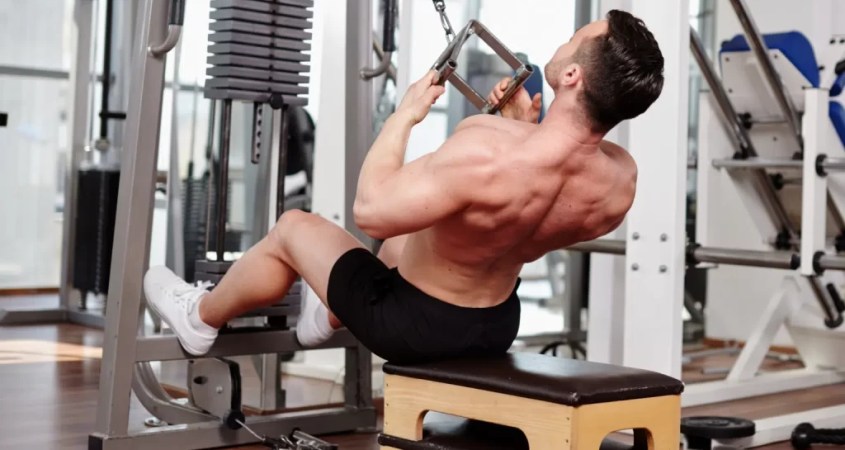
What If You Hate the Gym? How Personal Training Can Make Fitness Feel Less Intimidating

For many people, the hardest part of getting healthier isn’t the workout itself—it’s walking through the gym doors. The loud music, unfamiliar equipment, and feeling that everyone else knows what they’re doing can make the experience overwhelming. If you’ve ever avoided exercise because the gym feels intimidating, you’re not alone.

The good news is that fitness doesn’t have to start with fear. Working with a Personal Training gym or personal trainer can transform the experience into something supportive, structured, and even enjoyable.

Why the Gym Feels Intimidating

Gym anxiety is surprisingly common, especially among beginners or people returning after a long break. Some of the biggest reasons include:

  • Not knowing how to use equipment
  • Worrying about being judged by others
  • Feeling overwhelmed by crowded spaces
  • Uncertainty about which exercises to do
  • Fear of getting injured

These concerns often lead people to delay their fitness journey, even when they’re motivated to improve their health.

Personal Training Removes the Guesswork

One of the biggest advantages of personal training is having a clear plan from day one. Instead of wandering around the gym wondering where to begin, your trainer creates workouts that match your goals, current fitness level, and any physical limitations.

This structure helps reduce stress because every session has a purpose. Rather than trying random exercises found online, you’ll know exactly what you’re doing and why you’re doing it.

Confidence Comes From Learning

Confidence isn’t something most people bring into the gym—it’s something they build over time.

A personal trainer teaches proper exercise technique, explains how different movements work, and answers questions as they come up. Over time, equipment that once looked confusing becomes familiar, and exercises that once felt impossible start feeling natural.

Learning these skills also makes future workouts more independent and enjoyable.

A Supportive Environment Matters

Many people assume personal training is only for athletes or advanced lifters, but that’s far from reality. Good trainers spend most of their time helping everyday people become healthier and more confident.

Instead of feeling judged, clients receive encouragement, constructive feedback, and realistic expectations. This supportive relationship often makes people far more consistent than trying to stay motivated alone.

Fitness Doesn’t Have to Be All or Nothing

One common mistake beginners make is believing they need to train intensely every day to see progress. In reality, sustainable fitness is built through consistency.

A personal trainer helps you create realistic goals, whether that’s:

  • Exercising two or three times per week
  • Improving mobility
  • Building strength safely
  • Losing body fat gradually
  • Increasing daily energy

Small, achievable wins create momentum that lasts far longer than extreme workout plans.

Safety Builds Long-Term Success

Poor exercise technique can lead to unnecessary aches, pains, or injuries that discourage people from continuing.

A personal trainer monitors your movement, adjusts exercises when needed, and gradually increases difficulty as your body adapts. This reduces injury risk while helping you progress more efficiently.

When people feel safe during exercise, they’re much more likely to stick with it.

The Right Environment Makes All the Difference

Not every gym offers the same experience. Some prioritize large crowds and self-guided workouts, while others focus on personalized coaching and individual attention.

Finding an environment where you feel comfortable can completely change your relationship with exercise. Instead of dreading workouts, you may begin looking forward to them because you know you’ll receive guidance and support every step of the way.

Final Thoughts

If you’ve been avoiding fitness because traditional gyms feel overwhelming, remember that there’s nothing wrong with needing guidance. Everyone starts somewhere, and asking for help often leads to faster progress and greater confidence.

Personal training isn’t about pushing you beyond your limits—it’s about meeting you where you are today and helping you build habits you can maintain for years to come. For many people, that’s the difference between quitting after a few weeks and finally making fitness a lasting part of life.

Strength Programs

More Articles

How Whey Protein Supports Strength Training and Fat Loss Goals

If you’re serious about building strength and losing fat, your nutrition matters just as much as your training program. While the fitness industry is full of overhyped trends, whey protein remains one of the few supplements consistently backed by research for supporting muscle growth and improving body composition.

It doesn’t matter if you’re a complete beginner or an experienced athlete. Understanding how whey works helps you make smarter decisions about your nutrition. Adding it to your routine can simplify meal planning, support recovery, and make it much easier to hit your daily protein targets.

What Makes Whey Protein So Effective?

Whey is a fast-digesting dairy-derived protein that contains all nine essential amino acids. It is a byproduct of cheese production and has been studied extensively for its role in muscle repair and recovery. Its leucine content is particularly important because leucine is the amino acid primarily responsible for stimulating muscle protein synthesis.

When you consume whey protein after resistance training, you provide your muscles with the building blocks they need to repair and adapt. Research published in peer-reviewed journals consistently shows that consuming adequate protein around resistance exercise supports post-exercise muscle protein synthesis and promotes a positive muscle protein balance during recovery.

Its rapid absorption also makes whey a convenient choice after training. While meeting your total daily protein intake is far more important than precise timing, a fast-digesting protein can be an easy and practical way to support recovery after a workout.

How Whey Supports Strength Gains

Strength training creates tiny amounts of damage within your muscle fibres. Recovering from that damage is how your body adapts and becomes stronger, but it cannot happen efficiently without enough dietary protein.

Whey helps bridge the gap between what your body needs and what you get from food alone. As training volume increases, many lifters find it difficult to consistently hit their daily protein goals through meals alone. A quality whey supplement makes reaching those targets much more manageable.

It also helps to spread your protein intake across the day rather than relying on one or two protein-heavy meals. Consuming protein regularly provides your muscles with a steady supply of amino acids to support ongoing repair and adaptation. Research has shown that higher-protein diets are associated with better muscle retention and greater strength gains in people who perform resistance training.

The Role of Whey Protein in Fat Loss

Protein supplements are often associated with building muscle, but whey can also be a valuable tool for fat loss. Protein has the highest thermic effect of all the macronutrients, meaning your body uses more energy digesting protein than it does carbohydrates or fats.

Whey also helps you stay fuller for longer. Research suggests that higher protein intakes can reduce appetite and lower overall calorie consumption throughout the day, making it easier to stick to a calorie deficit without constantly feeling hungry.

Just as importantly, whey helps preserve lean muscle while you’re losing weight. During a calorie deficit, your body can break down muscle tissue alongside fat. Eating enough high-quality protein helps minimise muscle loss, making it more likely that the weight you lose comes primarily from body fat rather than lean muscle.

Research from weight-loss intervention studies also suggests that whey protein is a practical and cost-effective supplement that fits well into structured fat-loss programs.

Whey Protein for Women in Strength Training

The idea that protein supplements are only for men is one of those fitness myths that refuses to disappear. Women who lift weights need sufficient protein just as much as men do to recover properly, build lean muscle, and support their body composition goals.

Increasing your protein intake also supports healthy body composition over the long term. Preserving and building lean muscle can modestly improve your resting metabolic rate since muscle tissue consumes more energy to maintain than fat tissue. While it is not a magic solution, it can make maintaining fat loss easier when combined with regular resistance training and a balanced diet.

You also don’t need anything overly complicated. Choosing a quality whey supplement with a straightforward ingredient list and an appropriate serving size makes it easy to increase your daily protein intake without unnecessary added sugars or excess calories.

Tips for Getting the Most From Whey Protein Supplementation

Time Your Intake Practically

Having whey after your workout is a convenient way to kick-start recovery, but don’t stress if you can’t drink it the moment you rack the weights. For most people, consistently meeting their daily protein target matters far more than drinking a shake within a strict 30 to 60-minute window.

Pair It With a Balanced Diet

Whey works best as part of an overall nutrition plan. Use it to complement a diet built around whole foods rather than replace nutritious meals. Lean meats, dairy, eggs, seafood, legumes, nuts, and other protein-rich foods should still make up the foundation of your diet.

Stay Consistent

Like your training program, protein supplementation works best when you’re consistent. Focus on meeting your protein goals day after day, adjust your intake as your training changes, and let those habits compound over time.

For anyone looking for a reliable overview of protein supplementation, Healthline’s guide to protein intake offers a clear, evidence-based starting point. Whey protein remains one of the most practical nutritional tools available for people who want to build strength while supporting their fat-loss goals.

Feed the Work

Stop overcomplicating your fitness. You can’t out-train a poor diet, and you don’t need to chase every new supplement that pops up on social media. Whey protein isn’t magic, but it doesn’t have to be. It’s a simple, reliable way to help you hit your protein goals, recover well, and support the work you’re already putting into the gym. Stay consistent, trust the process, and let your nutrition do its part.

Strength Programs

More Articles

Building Mental Strength: Why Small Challenges Matter Every Day

When people talk about strength, they usually think about physical power — lifting weights, running faster, or building endurance. But true strength is not only physical. Mental strength plays an equally important role in achieving goals, overcoming challenges, and staying consistent over time.

Mental strength is what allows a person to stay focused, make decisions under pressure, and keep moving forward even when things become difficult. Just like physical strength, it can be trained. And often, it is built through small daily challenges rather than big dramatic moments.

The Power of Small Daily Challenges

Many people believe that improvement requires major effort or life-changing decisions. In reality, progress often comes from small, consistent actions. Simple habits, repeated daily, can reshape the way we think and react to situations.

These challenges do not need to be complex. In fact, the most effective exercises are often the simplest ones. What matters is consistency and focus.

Examples of small mental challenges include:

  • solving short logic problems
  • training reaction speed
  • improving focus through quick tasks
  • learning to stay calm under time pressure

Each of these activities trains the brain to process information more efficiently.

Focus and Decision-Making Under Pressure

One of the key aspects of mental strength is the ability to stay focused when time is limited. Whether in sports, business, or everyday life, decisions often need to be made quickly.

When a person trains under light pressure, they gradually become more comfortable making decisions in real situations. This is similar to how athletes train for competition — by simulating real conditions in a controlled environment.

Short mental exercises can help develop this skill by forcing the brain to react quickly while maintaining accuracy.

Training the Brain Like a Muscle

Just as muscles grow stronger through resistance training, the brain becomes more efficient when it is challenged regularly. Tasks that require attention, quick thinking, and pattern recognition help improve cognitive performance.

These exercises do not need to be long or exhausting. Even a few minutes of focused activity can have a positive effect when done consistently.

Over time, this type of training can improve:

  • reaction speed
  • attention span
  • decision-making ability
  • mental endurance

The Role of Simplicity in Training

One common mistake people make is overcomplicating their routines. They try to follow complex systems or adopt too many habits at once. This often leads to burnout or inconsistency.

Simple tools and exercises are often more effective because they are easy to repeat. When something is easy to start, it is easier to stay consistent over time.

This applies not only to physical training but also to mental development.

Using Quick Challenges to Stay Sharp

Short, focused challenges are a practical way to maintain mental sharpness throughout the day. Instead of long sessions, these exercises can be integrated into daily routines.

For example, a quick number-based challenge can train both attention and speed. One such example is Number Hunt, a simple browser-based activity where players must quickly identify numbers under time pressure.

While the concept is straightforward, it requires concentration, quick reactions, and consistent focus — all of which are important components of mental strength.

Consistency Over Intensity

Many people focus too much on intensity and not enough on consistency. They try to push themselves hard for a short period of time but struggle to maintain the habit.

True strength, both physical and mental, comes from showing up regularly. Even small efforts, when repeated daily, can lead to significant improvements over time.

This principle applies to every area of life, from fitness and business to personal development.

Building a Strong Mindset

Mental strength is not built overnight. It is the result of repeated effort, discipline, and the willingness to face small challenges every day.

By incorporating simple exercises into your routine, you train your mind to stay focused, adapt to pressure, and respond more effectively to challenges.

Over time, these small habits create a stronger, more resilient mindset that supports long-term success.

Conclusion

Strength is not only about how much you can lift or how fast you can run. It is also about how well you can think, focus, and respond to challenges.

By training your mind through simple, consistent exercises, you build a foundation that supports every other area of your life. Whether through quick challenges, focused tasks, or daily habits, mental strength grows with practice.

And just like physical training, the most important step is to start — and keep going.

Strength Programs

More Articles

Gain Super Powers with Superpower Health

Are you healthy? Are you getting enough sleep? Do you know if your hormones in their optimal ranges? Or if you are you getting all the nutrients you need to optimize your health? These are all questions that Superpower Health has set out to answer for you! They make it simple and easy to understand with their state of the art system designed specifically to help you maximize your health and recovery so you can focus on training harder.

Try Superpower Health today and get $50 OFF all Superpower Health Services!

What is Superpower Health?

Superpower Health is an online health lab designed to help you discover your true health. They offer 100+ labs and review your results to be able to detect over 1,000 health conditions; from heart health to nutrient deficiencies and hormone balance. Then they give you a detailed diagnosis with an action plan to correct any major or minor health conditions that could be affecting your overall wellbeing.

How It Works

Superpower Health makes it quick and simple so you can start improving your health right away! It just takes 3 easy steps:

  1. Schedule your Lab Test – at home or a nearby facility! Most tests take less than 15 minutes!
  2. Get your Results – your results will be delivered to you within 10 days along with an actionable plan so you can start improving your health immediately! Everything is detailed in easy to understand language and is personalized to you!
  3. Take Action – after you receive your action plan, you can start putting it into action right away! It could be as simple as making a slight dietary change or drinking more water throughout the day! Some more major issues may require supplementation or further testing, but you will be guided through it every step of the way! Plus, now you caught your symptoms early and can get your health back on track before any major incident occurs!

What You Will Get

Knowledge. Knowledge is power and that is exactly what you get with Superpower Health. You get the knowledge you need to improve your health so you can train harder and recover faster. Including an actionable plan that guides you through the exact steps you need to take in order to start immediately improving your health. Plus, a complete Superpower Diagnostics Panel and personalized actionable biomarker insights.

You will also get access to an entire ecosystem of doctors and other members that can help you learn more about your results, as well as the best way to approach them. This is priceless knowledge that you don’t have to wait for. You can talk with a doctor right away to get the help you need!

On top of all that,  you get access to the Superpower Health supplement store which provides high quality supplementation for any of your health needs. These are not cheap branded supplements that don’t work. Everything is clinically tested and designed to help with your specific health condition.

Try Superpower Health today and get $50 OFF all Superpower Health Services!

What They Test For

Here is as short list of what Superpower Health can help you test for:

  • Heart and Vascular Health
  • Kidney Health
  • Metabolic Health
  • Inflammation
  • Energy
  • Body Composition
  • Liver Health
  • Hormone Health
  • Nutrients and Deficiencies
  • Thyroid Health
  • Immune Health
  • DNA Health

Specific Health Biomarkers

  • Apolipoprotein B (ApoB)
  • Atherogenic Coefficient
  • Atherogenic Index of Plasma (AIP)
  • Cholesterol, Total
  • Cholesterol/HDL Ratio
  • Cystatin C (with eGFR)
  • HDL Cholesterol
  • HDL P (Advanced panel)
  • HDL Size
  • Advanced panel
  • LDL Cholesterol
  • LDL Cholesterol / Total Cholesterol (Mass Ratio)
  • LDL P (Advanced panel)
  • LDL Size (Advanced panel)
  • LDL-C / ApoB
  • LDL/HDL Ratio
  • Large HDL P (Advanced panel)
  • Large VLDL P (Advanced panel)
  • Lipoprotein (a) (Advanced panel)
  • Lipoprotein fractionation

My Experience with Superpower Health

My experience with Superpower Health was even better than expected. I had a lot of questions about my health and they answered all of them!

I scheduled my lab tests online and was able to get an appointment within 3 days. The appointment took about 11 minutes in total and was easy to get through. Then only 5 days later I got my results along with an action plan of what to do to maximize my health!

My biggest concerns were with my hormone health and nutrient levels. Luckily my hormones were normal, but they did find that I was lacking some key nutrients. Some were even too high, but they gave me a quick action plan of how to correct that.

They even found early signs of a major health issue that I would never have thought to check for. However, now I can start working towards correcting it so I do not have any major medical issues in the future.

Overall, it was quick, easy and extremely helpful! I got the knowledge I needed to maximize my health and start living my best life! I know the things I need to watch out for moving forward and if I ever have any issues, I can always check in with the community of doctors or members to learn more.

If you haven’t already, you should seriously consider looking into Superpower Health. It can truly be life changing!

Try Superpower Health today and get $50 OFF all Superpower Health Services!

Strength Programs

More Articles

Unlocking Strength: How Cable Machines Build Muscle with Precision and Control

Cable machines are a cornerstone of modern gyms, designed to deliver consistent resistance through a system of pulleys and adjustable weight stacks. Unlike free weights, which rely on gravity, cables provide controlled tension across multiple planes of motion. This makes them stand out as versatile tools for developing strength with accuracy and stability.

For lifters at any stage, the promise is clear: cable machines bring precision, control, and adaptability that free weights alone can’t always match. Whether you want to fine-tune your form, isolate hard-to-target muscles, or add variety to your training, cables create opportunities to train smarter.

You should care about them because they let you move naturally, challenge your muscles in every direction, and build strength without the same risk of uncontrolled movement.

What makes cable machines different from free weights?

What is a cable machine? Cable machines are strength-training systems that use pulleys, cables, and a weight stack to create adjustable resistance for a wide variety of exercises. Unlike fixed-path machines, they allow you to move freely while still providing guided resistance.

At their core, cable machines differ from dumbbells, barbells, and resistance bands because they deliver constant tension throughout every phase of the lift. With free weights, resistance varies depending on leverage and gravity. Bands change resistance based on stretch length. Cables, however, maintain steady pressure and allow for more fluid, multi-directional exercises.

This consistency makes them uniquely effective for targeting muscles at angles free weights often miss, while also letting you adjust load and path to suit your body.

Here’s how they compare:

  • Free weights – Offer natural movement patterns, but resistance drops at certain points in the range of motion.
  • Resistance bands – Portable and inexpensive, but resistance is variable and less precise.
  • Cable machines – Provide constant tension, adjustable angles, and a wide variety of controlled exercise options.

How do cable machines actually work?

A cable machine operates through a simple yet effective mechanical system. A weight stack connects to one or more pulleys via steel cables. When you pull on a handle, the force transfers through the pulley system, lifting the selected weight plates. The smooth travel of the cable ensures resistance is steady across the entire motion, unlike free weights where leverage points create sticking spots.

This system allows you to adjust both resistance and direction instantly, making it one of the most versatile strength-training tools.

Main mechanical components include:

  • Pulleys – Guide the cable and control resistance direction.
  • Cables – Connect the handle to the weight stack.
  • Weight stack – Plates that provide adjustable resistance.
  • Handles/attachments – Grips or bars used to pull or push.
  • Carabiners – Connect attachments securely.
  • Frame – Provides stability and support.
  • Adjustment pins – Let you select weight or pulley position.

What are the main parts of a cable machine?

To understand how these machines function, it helps to look closely at each component:

  • Pulleys – Rotating wheels that reduce friction and guide cable direction.
  • Cables – Coated steel wires that transfer force efficiently.
  • Weight stack – Series of plates linked to a selector pin for quick changes.
  • Handles – From straight bars to rope grips, these allow different movements.
  • Carabiners – Small but vital connectors for swapping attachments.
  • Frame – The steel structure keeping the system steady.
  • Adjustment pins – Used to change pulley height or lock the selected weight.

What muscles can you target with cable machines?

Cable machines allow you to hit every major muscle group with precision. Unlike some equipment that locks you into a single path, cables can be adjusted to mimic natural joint movement, letting you strengthen muscles from multiple angles. They’re equally useful for isolation drills and full-body functional training.

By adjusting pulley height, handle type, and stance, you can engage different areas of the body:

  • Upper body – Chest flys, rows, shoulder raises, and triceps pushdowns.
  • Core – Woodchoppers, cable crunches, and anti-rotation holds.
  • Lower body – Glute kickbacks, lunges, and hip abductions.

Can cable machines build full-body strength?

Yes. While often used for isolation work, cable machines can also support compound movements. They let you replicate exercises like squats, bench presses, and deadlifts with added control and tension.

For example, a cable chest press challenges the chest, shoulders, and triceps, while cable squats combine lower-body strength with core engagement. Isolation moves like bicep curls or lateral raises can then fine-tune specific muscles. This combination makes cable training effective for building both size and functional strength.

What are the main types of cable machines?

What are the main types of cable machines?

Different models offer unique benefits, so choosing the right one depends on your training goals and available space.

Single-stack cable machines

Compact, with one weight stack. Great for beginners or home gyms, though limited in versatility.

Dual-stack functional trainers

Feature two adjustable columns, allowing independent or linked resistance. Highly versatile and common in commercial gyms.

Cable crossovers

Wide-frame systems designed for chest and shoulder training. Excellent for flys but require significant space.

Adjustable pulley systems

Offer flexible pulley positioning, enabling a wide variety of exercises at different angles.

Specialized cable attachments

Machines dedicated to one purpose, like lat pulldown towers or seated row stations. Perfect for focused strength work.

What advantages do cable machines offer for muscle building?

Cable systems bring several benefits that make them indispensable for strength training:

  • Constant tension – Keeps muscles engaged through the entire movement.
  • Safety – Resistance is controlled, reducing risks of dropping weight.
  • Joint-friendly – Adjustable angles align better with natural joint paths.
  • Progressive overload – Small weight increments support steady growth.
  • Versatility – One machine can replace multiple free-weight exercises.

How do cable machines help improve form and reduce injury risk?

The guided resistance path means you don’t need to stabilize the weight as much as with free weights. This allows for better control, particularly during rehab or for those with mobility issues. Adjustable pulleys also let you match resistance to your body mechanics, which helps maintain joint alignment and minimize stress.

How to use cable machines effectively for strength training?

Getting results from cable training isn’t just about pulling handles—it’s about setting up properly and moving with control.

Steps to follow:

  • Adjust pulley height and machine settings.
  • Select appropriate weight with the pin.
  • Attach the correct handle for the exercise.
  • Position your body with stable footing.
  • Perform movements with controlled tempo.
  • Apply progressive overload over time.

What are the most important setup tips?

  • Adjust pulleys to match joint height.
  • Ensure pins are fully secured before lifting.
  • Test weight with a light rep before starting.

What are the most effective cable exercises for each muscle group?

Chest-focused cable exercises

  • Cable chest press
  • Cable flys

Back-focused cable exercises

Shoulder-focused cable exercises

Arm-focused cable exercises

Leg and glute-focused cable exercises

  • Cable kickbacks
  • Cable lunges

Core and stability-focused exercises

  • Cable crunches
  • Pallof press

How do cable machines compare to other training equipment?

  • Dumbbells – Offer natural movement but lack constant tension.
  • Barbells – Best for maximum load, but less versatile.
  • Resistance bands – Great for portability but not precise.
  • Fixed-path machines – Provide stability but limit movement freedom.

Cables strike a balance by combining the natural feel of free weights with the safety of machines.

Can cable machines support progressive overload and hypertrophy?

Can cable machines support progressive overload and hypertrophy?

Yes. You can track incremental weight increases just like free weights. Beyond adding plates, cables also make it easy to apply advanced techniques like tempo variations or unilateral training.

What training techniques work best on cable machines?

  • Supersets for time efficiency.
  • Drop sets for fatigue training.
  • Isometric holds for stability.
  • Time under tension to maximize growth.

What are common mistakes to avoid on cable machines?

  • Setting pulleys at the wrong height.
  • Using jerking motions instead of controlled reps.
  • Ignoring core stability during moves.
  • Choosing weights that are too heavy.
  • Gripping poorly or with unstable wrists.

Are cable machines good for beginners or only advanced lifters?

They’re accessible for every level. Beginners benefit from the safety and guidance, while advanced athletes can apply precision overload and variety.

Tips for new users:

  • Start with lighter weight to learn form.
  • Focus on slower, controlled movements.
  • Use mirrors or trainer feedback for alignment.

What role do cable machines play in rehabilitation and functional fitness?

Their controlled resistance makes them valuable for recovery programs. Therapists use them to rebuild strength without overloading joints. Athletes also benefit from the ability to mimic sport-specific motions, like rotational swings or pushing and pulling patterns, under resistance.

What attachments and accessories enhance cable workouts?

  • Rope handles – Ideal for triceps and core.
  • Straight bars – Great for biceps and back.
  • V-bars – Useful for rows and pulldowns.
  • Ankle cuffs – For glute and leg work.
  • Single D-handles – Versatile for unilateral training.

How do you maintain and care for a cable machine?

  • Inspect cables regularly for wear.
  • Lubricate pulleys to ensure smooth travel.
  • Tighten bolts and connections.
  • Check selector pins for stability.

Commercial gyms should maintain equipment weekly, while home users can do monthly checks.

What are alternatives to cable machines if you don’t have access?

  • Resistance bands for portable tension.
  • Suspension trainers for bodyweight leverage.
  • Dumbbells for free movement.
  • Plate-loaded machines for focused strength.

Each alternative works, but none match the precision and adjustability of cables.

Conclusion

Cable machines stand out as versatile tools that combine safety, control, and effectiveness in one package. They allow you to train every muscle group, support beginners and advanced lifters alike, and even play a role in rehabilitation.

With their constant tension and adjustable mechanics, they’re a smart investment for anyone serious about strength training. If you’re looking for a way to train with precision, reduce injury risk, and unlock new levels of performance, cable machines deliver the balance of science and strength.

Strength Programs >>

More Articles >>