Tag: Exercises

Top 3 Best Tricep Exercises | Science Based

When it comes to building strong, defined triceps, everyone seems to have their favourite tricep exercises. Personally, I’m a huge fan of movements that hit all parts of the muscle—triceps push-ups, dips, and triceps kickbacks are some of the best in my book. Each of these tricep exercises is backed by science and effective at engaging the muscle in different ways, helping you develop strength, size, and definition.

What Are the Triceps?

The triceps brachii, or simply “triceps,” is the large muscle located on the back of your upper arm. It plays a critical role in arm extension, helping you straighten your elbow and perform pushing movements. Understanding the anatomy of this muscle can help you pick and understand tricep exercises better. The triceps consist of three distinct parts:

Long Head

The long head originates from the scapula (shoulder blade) and spans across the shoulder and elbow joints. This part is responsible for arm extension and shoulder stabilization. It contributes to the bulk of the upper arm, particularly when viewed from the side.

Lateral Head

The lateral head is located on the outer side of the upper arm. It is highly active during heavy pressing movements and gives the triceps its characteristic “horseshoe” shape.

Medial Head

The medial head lies beneath the other two and is positioned closer to the inner arm. Though less visible, it plays a crucial role in overall arm stability and endurance during repetitive movements.

How to Target a Specific Part of the Triceps

Targeting specific parts of the triceps with exercises—the long head, lateral head, or medial head—comes down to arm and elbow positioning. Each variation emphasizes different portions of the muscle, allowing for focused development.

Arm Position

Exercises with the arms overhead, such as overhead triceps extensions, stretch and engage the long head more because of its connection to the scapula. This creates a greater range of motion for this portion of the muscle.

Elbow Positioning

Keeping the elbows close to the torso during movements like triceps pushdowns emphasizes the medial head. In contrast, flaring the elbows slightly outward during pressing exercises shifts more effort to the lateral head, which is highly activated during heavy, compound movements.

Top 3 Best Science-Based Triceps Exercises

When it comes to building strong, defined triceps, science can help guide your efforts. The American Council on Exercise (ACE) conducted a study to determine which triceps exercises are the most effective. Their research used electromyography (EMG) to measure muscle activation, revealing the top three exercises for targeting the triceps: triceps push-ups, dips, and triceps kickbacks. Here’s a detailed breakdown of these exercises, including how to perform them, the benefits, and which part of the triceps they work.

1. Triceps Push-Ups

Triceps Push-Ups Exercise

How to Perform:

  1. Start in a high plank position with your hands directly under your shoulders.
  2. Keep your body in a straight line from head to heels.
  3. Lower yourself toward the floor, keeping your elbows close to your body.
  4. Push back up to the starting position, maintaining core engagement throughout.

Benefits:

Triceps push-ups are a powerhouse for building strength because they rely solely on your body weight. This exercise also improves core stability and upper body strength while keeping the shoulder joint stable.

Muscle Focus:

By keeping your elbows tucked in, this triceps exercise primarily targets the medial and lateral heads of the triceps, ensuring balanced development.

2. Triceps Dips
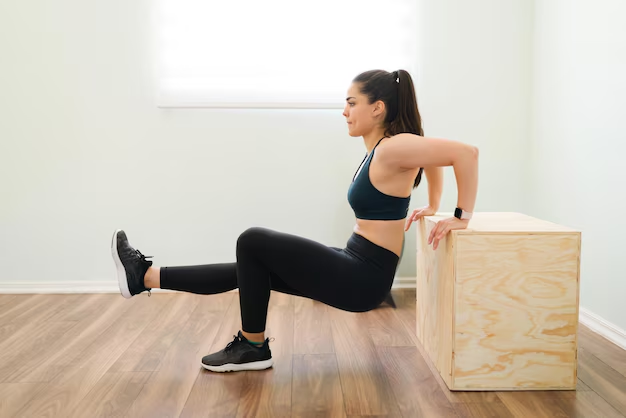
Triceps Dips Exercise

How to Perform:

  1. Use parallel bars, a sturdy bench, or even the edge of a couch for support.
  2. Place your hands shoulder-width apart and extend your legs out in front of you.
  3. Lower your body by bending your elbows to about a 90-degree angle.
  4. Push back up, fully extending your arms without locking the elbows.

Benefits:

Tricep Dips are a compound movement that not only isolates the triceps but also engages your chest and shoulders. They are versatile, requiring minimal equipment, and are excellent for building overall upper body strength.

Muscle Focus:

Dips work the long head of the triceps more effectively than most other exercises due to the overhead position of the arms, which stretches this portion of the muscle.

3. Triceps Kickbacks

Triceps Kickbacks Exercise

How to Perform:

  1. Hold a dumbbell in one hand and bend forward at the hips, keeping your back flat.
  2. Bend your elbow to 90 degrees, with your upper arm close to your torso.
  3. Extend your arm straight back, squeezing the triceps at the top.
  4. Slowly return to the starting position and repeat.

Benefits:

Triceps kickbacks are a highly effective isolation exercise. They target the triceps directly, making them ideal for fine-tuning definition and symmetry. You can easily adjust the weight to match your fitness level, making it suitable for beginners and advanced lifters alike.

Muscle Focus:

Kickbacks emphasize the lateral head of the triceps, helping create the coveted “horseshoe” shape that signifies well-developed arms.

How to Structure your Triceps Workout

Structuring a triceps workout effectively ensures balanced development and maximizes muscle activation. Start with compound exercises, like dips or close-grip bench presses, as these recruit the most muscle fibers and allow you to lift heavier weights when your energy is highest. Afterward, move to isolation exercises, like triceps pushdowns or kickbacks, to target specific parts of the muscle with precision.

Common mistakes with tricep exercises include overloading on isolation movements early in the session, which can exhaust smaller muscle fibers and limit your performance in compound exercises. Another pitfall is neglecting rest and recovery between sets; triceps are smaller muscles and need proper rest to sustain effort.

For the best results, aim for a mix of overhead movements (for the long head), pressing motions (for the lateral head), and close-grip exercises (for the medial head). Rotating these variations ensures well-rounded development and reduces the risk of overuse injuries.

3 Reasons Why you Should Focus on your Triceps

Training your triceps is essential for several reasons, whether you’re a casual gym-goer or a serious lifter.

Firstly, the triceps make up a significant portion of your upper arm. By training with the triceps exercises we mentioned above, you’ll improve overall arm size and definition, creating a more balanced and aesthetically pleasing physique. Strong triceps are key to achieving that “toned” look that many aim for.

Secondly, developing strong triceps betters your pushing power. The triceps are involved in almost every pressing movement, from push-ups to bench presses. A well-trained tricep improves performance in these exercises, helping you lift more weight and making other upper-body exercises more effective.

Lastly, strong triceps contribute to functional strength. Whether you’re pushing a heavy door, lifting boxes, or performing sports-related movements, having strong triceps improves your everyday ability to perform pushing motions with ease and reduces the risk of injury.

FAQ

Which tricep exercise is most effective?

The most effective triceps exercise depends on your goals. However, dips and close-grip bench presses are often considered top choices due to their ability to target multiple heads of the triceps with heavy resistance.

How do you hit all three tricep heads?

To target all three heads of the triceps, incorporate a variety of movements. Overhead exercises like triceps extensions hit the long head, while close-grip presses and dips focus on the lateral and medial heads. A well-rounded routine ensures balanced development.

Are 3 exercises enough for triceps?

Yes, three exercises can be enough, especially if they vary in movement patterns. For example, combining a compound movement (like dips), an overhead exercise (like triceps extensions), and an isolation movement (like pushdowns) can target all areas effectively.

How can I tone my triceps fast?

To tone the muscle quickly, focus on progressive overload—gradually increasing the weight or reps of the tricep exercises we mentioned. Consistency, along with a balanced diet and overall fat loss, will reveal leaner, more defined triceps over time.

Strength Programs >>

More Articles >>

Muscle Activation Technique Exercises

Muscle Activation Techniques

The Mathias Method Strength System emphasizes the importance of a proper warm-up before you begin any strength training routine or workout program. This is to help decrease pain, prevent injury, and fully prepare your body for the workout ahead. This page will go over our Muscle Activation Technique Exercises for the Squat and Deadlift

Get our complete How To Warm-Up Properly for Strength Training Guide today! And learn why you should NOT do cardio to warm-up before a weight training workout!


600 lb deadlift

About Muscle Activation Techniques

First, do a complete full-body dynamic warm-up routine and lower-body warm-up exercises before you start these Muscle Activation Techniques.

Then, the next part of the Mathias Method Strength System’s warm-up uses muscle activation technique exercises, to fully prepare your muscles for the workout ahead. These muscle activation techniques teach the correct muscles to turn on, or activate, and bring blood flow to the muscles before the workout begins.

Muscle activation exercises are specific to every workout’s main strength movement. These muscle activation techniques include balance training to improve neuromuscular proprioception, or muscle activation, and joint stability.

By combining your dynamic bodyweight warm-up with these muscle activation techniques, you are improving your range-of-motion and strength in those positions.

After completing these muscle activation technique exercises, then you will be fully warmed up and ready to Squat 500+ or Deadlift 600+ pounds!

For all of our specific workout based warm-up routines, you can check out our How To Warm-Up Properly Guide.

More Warm-Up Routines

See all of our Mobility Stretches or Strength Training Exercises.


Muscle Activation Technique Exercises

Single Leg Romanian Deadlift

Reps: 10 each side

Purpose: Hamstring Activation

  • Stand erect at an arms distance away from a stable object, if needed for balance. 
  • With a slight bend in your knee, hover one foot off the floor while maintaining a straight line from your head to that foot.
  • Then, lean your torso forward as you extend your opposite leg behind you.
  • Keep your hips square and internally rotate (toes in) your foot as it moves behind you.
  • Stop when you feel a stretch in your hamstrings or reach 90 degrees of hip flexion.
  • Pause for 2 seconds before flexing your hamstrings to return back to the starting position.

Hip Airplanes

Reps: 10 each side

Purpose: Glute Activation

  • Stand erect at an arms distance away from a stable object to use for balance.
  • Hover one foot off of the floor and lean your torso 30-45 degrees forward, keeping your raised leg in line with your torso.
  • Then, bend your grounded leg to a more stable position and keep your hips in line with your shoulders throughout the movement.
  • To start, internally rotate your raised leg’s hip inward towards your opposing knee before flexing your glute to reverse the motion, externally rotating your hip away from the opposing knee.
  • Control the motion with your glute and maintain a straight line from your raised foot to your head.

Bulgarian Split Squat

Reps: 10 each side

Purpose: Activate Quadriceps and Mobilize Hip Flexors

  • Start by standing erect and placing the ball of one foot on a raised surface (6-12 inches) behind you.
  • While maintaining a vertical torso, hips square and your glutes activated, dip your raised knee down until you feel a stretch in your anterior thigh, or reach 90 degrees of knee flexion in your front leg.
  • Hold this position for two seconds before flexing back to the start position.
  • To increase the stretch further, raise the surface higher or put your front foot out in front of you farther.
  • Do not let your front knee go over your toes at any point.

When you finish these muscle activation technique exercises, then you will be fully warmed up and ready to Squat 500+ or Deadlift 600+ pounds!

All Warm-Up Routines

See all of our Mobility Stretches or Strength Training Exercises.

For all of our specific workout based warm-up routines, you can check out our How To Warm-Up Properly Guide.

how to warm-up properly for strength training book

430 Squat by Team stronger Reid England

Shoulder Warm-Up Exercises

The Mathias Method Strength System emphasizes the importance of a proper warm-up before you begin any strength training routine or workout program. This is to help decrease pain, prevent injury, and fully prepare your body for the workout ahead. This page will go over our Dumbbell Shoulder Warm-Up Exercises for the Bench Press.

Get our complete How To Warm-Up Properly for Strength Training Guide today! And learn why you should NOT do cardio to warm-up before a weight training workout!


Dumbbell Shoulder Warm-Up for the Bench Press

A Proper Shoulder Warm-Up

First, do a complete full body dynamic warm-up routine and our upper body warm-up exercises before you start this Dumbbell Shoulder Warm-Up Routine.

Then, the next part of the Mathias Method Strength System’s warm-up uses muscle activation technique exercises, to fully prepare your muscles for the workout ahead. These muscle activation techniques teach the correct muscles to turn on, or activate, and bring blood flow to the muscles before the workout begins.

Muscle activation exercises are specific to every workout’s main strength movement. These muscle activation techniques use dumbbells to improve neuromuscular proprioception, or muscle activation, and joint stability.

By combining your dynamic bodyweight warm-up with these shoulder muscle activation techniques, you are improving your range-of-motion and strength in those positions.

After completing these dumbbell shoulder warm-up exercises, then you will be fully warmed up and ready to Bench BIG!

For all of our specific workout based warm-up routines, you can check out our How To Warm-Up Properly Guide.

More Warm-Up Routines

See all of our Mobility Stretches or Strength Training Exercises.


Dumbbell Shoulder Warm-Up Exercises

Purpose: Activate Deltoids and Improve Shoulder Function.

Lateral Raises

Reps: 10-15

IMG_0418IMG_0419

  • Holding 5-10 lb dumbbells, lean slightly forward, with arms slightly bent.
  • Then, slowly raise the dumbbells out laterally until they are above shoulder height.
  • Pause before slowly controlling the motion down to the start.

Front Raises

Reps: 10-15

IMG_0415IMG_0416

  • Holding 5-10 lb dumbbells, stand erect and slowly raise the dumbbells in front of you until they are above shoulder height.
  • Pause before slowly controlling the motion down to the start.

Reverse Flyes

Reps: 10-15

IMG_0413IMG_0414

  • Holding 5-10 lb dumbbells, lean your torso forward and allow your arms to extend down until they are nearly touching the floor.
  • With arms slightly bent, slowly raise the dumbbells out laterally until they are above shoulder height.
  • Pause before slowly controlling the movement down to the start.

Dumbbell Military Press

Reps: 10-15

IMG_0410IMG_0409

  • Holding 5-10 lb dumbbells just over your shoulders externally rotate your elbows out to the sides as you press the weight overhead.
  • While maintaining a vertical torso, try to continuously maintain a backward pull throughout the movement.
  • Reverse the motion by lowering the weights and pulling your elbows back and down towards your hips, until the dumbbells are once again set over your shoulders.

Shoulder Dislocations

Reps: 10 total

Purpose: Improve Shoulder Function and Mobility.

  • Grasp a band, strap or light pole with a much wider than shoulder width grip.
  • Flex your glutes, brace your core and pull your shoulder blades back and down throughout the motion.
  • Starting in the front, keep your arms fully extended as you raise them in front of you, over your head and all the way around to your glutes.
  • Then, reverse the motion back around towards your hips.
  • Try to grasp your hands as close as you can while still maintaining the full extension of your arms.
  • Only use a grip that brings a slight stretch to be felt as you rotate about the motion.

Note: If you cannot rotate around the through the full motion then only go as far as you can and pause in this position each time.


When you finish these dumbbell shoulder warm-up exercises, then you will be fully warmed up and ready to Bench BIG!

All Warm-Up Routines

See all of our Mobility Stretches or Strength Training Exercises.

For all of our specific workout based warm-up routines, you can check out our How To Warm-Up Properly Guide.

how to warm-up properly for strength training book

Weightlifting Warm-Up Routine

Olympic Weightlifting Warm-Up Routine

The Mathias Method Strength System emphasizes the importance of a proper warm-up before you begin any strength training routine or workout program. This is to help decrease pain, prevent injury, and fully prepare your body for the workout ahead. This page will go over our Olympic Weightlifting Warm-Up Exercises.

Get our complete How To Warm-Up Properly for Strength Training Guide today! And learn why you should NOT do cardio to warm-up before a weight training workout!


Olympic Weightlifting Warm-Up Routine Stretches and Exercises

How To Warm-Up for Weightlifting

First, do a complete full body dynamic warm-up routine before you start these Olympic Weightlifting Warm-Up exercises and stretches.

Then, the next part of the Mathias Method Strength System’s warm-up includes these workout specific warm-up exercises. These are done after your full body dynamic warm-up stretches but before your dumbbell shoulder warm-up.

This Olympic Weightlifting Warm-Up Routine will include a few specific mobility stretches for the calf-hamstring complex, hip flexors, ankles, chest, and shoulders. These will help prevent injury and increase strength as you teach your body how to move properly for strength.

When you are done with these Olympic weightlifting warm-up exercises, begin your technique work.

For all of our specific workout based warm-up routines, you can check out our How To Warm-Up Properly Guide.

More Warm-Up Exercises

See all of our Mobility Stretches or Strength Training Exercises.


Olympic Weightlifting Warm-Up Stretches

Calf-Hamstring Stretch

Reps: 30-120 seconds each side

IMG_0423

Purpose: Improve Knee Extension, Ankle Dorsi-flexion, Calf, and Hamstring Function.

  • With your knee fully extended, place the ball of your foot on a slightly raised surface and allow for your ankle to fully dorsiflex (pull your toes up towards your face).
  • Keep weight on the ball of your foot and your knee fully extended as you lean your torso forward.
  • Maintain a neutral spine and lean until you feel a stretch behind your knee.
  • Be active in the stretch by coming in and out of tension under control, contract-relax techniques and by flexing the opposing muscles (Quadriceps, Anterior Tibialis) to deepen the stretch.

Exaggerated Lunge

Reps: 30-60 seconds each side

IMG_0447

Purpose: Improve Hip Extension, Hip Flexor Function, and Hip Mobility.

  • While keeping your hips square, place one foot on a raised surface (12-20 inches high) in front of you and the other behind you.
  • Keep your front foot pointed forward and slightly internally rotate your back foot as you extend your leg behind you.
  • Keep your torso vertical, core braced and tension on your rear glute as you bend your front knee to initiate the stretch.
  • When you feel the tension in your hip flexor, hold that position.
  • To increase the stretch you can flex your glute to further press your hips forward or flex and extend your posterior knee slightly to find other tense positions to hold.

Single Leg Calf Stretch

Reps: 1-2 minutes each side

Purpose: Improve Ankle Dorsi-flexion and Calf Function.

  • With your knee fully extended, place the ball of your foot on a raised surface, high enough to feel a stretch in your calf.
  • Allow your heel to sink down as you put your weight on your foot.
  • Actively move around in this position by flexing in and out of it, forcing your knee into further extension, or pulling your toes towards your face.

Weighted Deep Squat Calf Stretch

Reps: 2-3 minutes

Purpose: Improve Ankle Dorsi-flexion and Calf Function.


  • While holding a barbell, place it just above your knee caps and go into a full depth squat.
  • Ensure that your heels are down in this position, and only rise slightly as you push the weight and your knees forward.
  • Move around in this position to create change, by flexing the opposing muscles and moving under control.
  • You may put more stress on one side by leaning the barbell to that side or placing all the weight on one side at a time.
  • Use this stretch sparingly as it is more intense than non-weighted mobility techniques.

Shoulder Dislocations

Reps: 10 total

Purpose: Improve Shoulder Function and Mobility.


  • Grasp a band, strap or light pole with a much wider than shoulder width grip.
  • Flex your glutes, brace your core and pull your shoulder blades back and down throughout the motion.
  • Starting in the front, keep your arms fully extended as you raise them in front of you, over your head and all the way around to your glutes.
  • Reverse the motion back around towards your hips.
  • Try to grasp your hands as close as you can while still maintaining the full extension of your arms.
  • Only use a grip that brings a slight stretch to be felt as you rotate about the motion.

Note: If you cannot rotate around the through the full motion then only go as far as you can and pause in this position each time.


When you finish these Olympic weightlifting warm-up exercises, begin your technique work.


All Warm-Up Routines

See all of our Mobility Stretches or Strength Training Exercises.

For all of our specific workout based warm-up routines, you can check out our How To Warm-Up Properly Guide.

how to warm-up properly for strength training book

Olympic Weightlifting Warm-Up Exercises

Upper Body Warm-Up Exercises

Upper Body Warm-Up for the Bench Press

The Mathias Method Strength System emphasizes the importance of a proper warm-up before you begin any strength training routine or workout program. This is to help decrease pain, prevent injury, and fully prepare your body for the workout ahead. This page will go over our Upper Body Warm-Up Exercises for the Bench Press.

Get our complete How To Warm-Up Properly for Strength Training Guide today! And learn why you should NOT do cardio to warm-up before a weight training workout!


Upper Body Warm-Up Exercises for the Bench Press

Bench Press Warm-Up Routine

First, do a complete full body dynamic warm-up routine before you start these Bench Press Warm-Up Exercises.

Then, the next part of the Mathias Method Strength System’s warm-up includes these workout specific warm-up exercises. These are done after your full body dynamic warm-up stretches, and before your muscle activation techniques.

This Upper Body Warm-Up Routine will include a few full range-of-motion exercises and mobility stretches for the chest, back, arms and shoulders. Together these will help prevent injury and increase strength as you teach your body how to move properly for strength.

When you are done with these upper body warm-up exercises, move onto our dumbbell shoulder warm-up exercises for the Bench Press.

You can do these warm-up exercises using an adjustable & multifunctional weight set for your home.

For all of our specific workout based warm-up routines, you can check out our How To Warm-Up Properly Guide.

More Warm-Up Routines

See all of our Mobility Stretches or Strength Training Exercises.


Upper Body Warm-Up Exercises

Note: Yes, many of these exercises will seem and look “dorky”. However, they ALL have a purpose!

Arm Circles

Reps: x 10 each direction

Purpose: Improve Shoulder Mobility and Function.

  • With your glutes flexed, core braced and spine neutral, simply circle your arms slowly through their full range of motion in each direction.
  • Do this under control at a slow-moderate pace.
  • Keep your head in line with your torso and do not flex or extend your thoracic (upper) spine.

Horizontal Hug & Open

Reps: x 10 total

Purpose: Improve Scapular Protraction and Retraction Function and Mobility, Pectoral Function, Thoracic Spine Flexion, and Extension Mobility.IMG_2368IMG_2369

  • With your palms facing down, cross your arms in front of your body and wrap them as far around your torso as you can allowing your thoracic (upper) spine to flex forward as needed.
  • Then, reverse the motion externally rotating your hands so that your palms face up as you extend your arms horizontally to your sides and try to pull them together behind you, allowing your thoracic spine to extend backward.
  • Let your scapula protract forward as you hug and retract back to open your chest.
  • Pause at the end of each motion and switch the crossing of your arms in front each time.

Shoulder Flexion-Extension

Reps: x 10 total

Purpose: Improve Shoulder Function, and teach proper shoulder movement.

  • With your glutes flexed, core braced and arms extended, raise your hands over and behind your head as far as you can with palms facing each other.
  • Then lower your extended arms under control and internally rotate your hands to palms facing backward as you extend behind your torso.
  • Do not allow your spine to flex or extend as you go through the full range of motion.
  • Keep your shoulder blades pulled back and down as you extend behind your hips.

Single Arm Swings

Reps: x 10 each way

Purpose: Shoulder Joint Synovial Fluid Lubrication and Improve Shoulder Function.

  • With your one arm slightly flexed, circle it at a fast pace through its full range of motion each direction.
  • Be sure to cross your arm in front of your body as you swing it.
  • Go fast, but maintain control of the motion.
  • After going each direction, repeat with the other arm.

Scapular Rotations

Reps: x 10 each direction

Purpose: Improve Scapular Function and Mobility.

  • With your arms flexed about 90 degrees, circle your shoulders forward and backward through their full range of motion in both directions.
  • Ensure that your scapula is moving up and down with the motion and can move freely.

Chest Stretch

Reps: x 10-30 seconds

upper body warm up chest stretch

Purpose: Improve Pectoral and Shoulder Function and Mobility.

  • With your arms extended out horizontally, grasp a stable object with each hand.
  • Pull your shoulder blades back and down as you push your chest forward until you feel a slight stretch in your chest.
  • Breathe calmly as you relax into the stretch before starting to move through the tension under control.
  • Maintain tension in your back as you pull your shoulders back actively.

Lat Stretch- Overhand

Reps: x 10-30 seconds

Purpose: Improve Shoulder Flexion and Latimus Dorsi Function and Mobility.

  • Grasp a stable object, near your head height, with an overhand grip (palms down).
  • While maintaining a neutral spine and hips square, extend the same side leg behind you as you lean forward until you feel a stretch in your lat.
  • With your arm and leg fully extended keep a forward torso lean as you attempt to push your head through, in front of your arm.
  • Work through the tension in this position by internally and externally rotating your torso.

Note: If you can flex your arm beyond your ear, then this movement is not necessary.


Doorway Pec Minor Stretch

Reps: x 10-30 seconds

Purpose: Improve Breathing Function, Scapular Elevation, and Depression Function.

  • Standing in a doorway, flex your arms 90 degrees and place the inside of your forearms against the outer frame with your elbows shoulder height.
  • With one foot, step through the doorway until you feel a stretch in your anterior chest.
  • Take deep breaths and relax into the motion to increase the effectiveness of this stretch.
  • By leaning your torso forward you can increase the stretch towards the external rotation of your shoulder.
  • This stretch may also be done one arm at a time against any stable object.

Scapular Protraction Stretch

Reps: x 10-30 seconds

Purpose: Improve Scapular Function and Mobility.

  • With one hand, grasp a stable object at shoulder height with an overhand grip.
  • Step the same side foot back and lean away from your hand.
  • Both internally and externally rotate your entire torso, to and away from your hand allowing for your scapula to stay protracted forward.

After completing these upper body warm-up exercises for the bench press, do our Dumbbell Shoulder Warm-Up Exercises. Then you will be fully warmed up and ready to Bench BIG!


All Warm-Up Routines

See all of our Mobility Stretches or Strength Training Exercises.

For all of our specific workout based warm-up routines, you can check out our How To Warm-Up Properly Guide.

how to warm-up properly for strength training book

Bench Press Warm-Up Exercises