Tag: Gym

8 Machines And Equipment You Really Need in Your Home Gym

Building a home gym is an investment with huge returns for your fitness. It can be a quick setup in your garage, a corner of your bedroom, or a dedicated room in your home. Any way you make it, you’ll want to know what equipment to use to outfit your dream gym.

All the options on this list come in various configurations and price ranges. Your specific product choices vary depending on your budget, space, and fitness goals.

Here are the top eight machines and equipment you really need in your home gym.

1.) Training Bench

A training bench allows you to expand your possibilities in your home gym that goes beyond bench pressing.

You can get a complete workout from a floor mat, but a quality training bench improves your range of motion and offers you a better place to lie than the floor.

A few considerations when choosing a weight bench are weight capacity, height, adjustability, and pad width. Some heavy-duty training benches have weight capacities of over 1000 pounds. Unless you’re a competitive powerlifter, a quality bench with about 700 pounds capacity will serve your home gym well.

Think about how you’ll use the bench to determine whether a flat or adjustable one will serve your needs. A bench may come with attachments for leg maneuvers you’re interested in too.

Beyond horizontal presses, you can use a bench for step-ups, prop your feet or hands to angle your body, or lay face down for chest-supported rows.

2.) Barbell

The barbell holds the weight plates that you’ll be lifting. Without the barbell, your bench, weight rack, and weight plates are of no use.

Durability is a key factor when choosing the right barbell. A high-quality barbell can last decades or a lifetime as long as you don’t drop in with no plates on it.

A barbell with bearings allows the weights to spin separately from the bar. You can reposition your hands more easily during movements like the clean and jerk and snatch with a barbell with bearings. However, powerlifters tend to prefer a bar that doesn’t spin for deadlifts, squats, and bench presses.

3.) Weight Rack

Strength trainers, bodybuilders, and competitive lifters likely find the weight rack the centerpiece of their home gym. It’s an essential piece that holds the barbell in place and provides extra plate storage. The option to add cable pulleys, dipping bars, or other extras makes your weight rack a multi-use training session station.

Space is a vital consideration for many machines and equipment on this list. Planning for a weight rack is no different. Three possible configurations are a power rack, a squat stand, or a foldable rack.

A regular power rack should have a sturdy frame and attachments to expand its usefulness in your home gym. Usually, it has four upright posts that support band pegs and dip bars at various heights.

A squat stand looks like a trimmed-down version of a power rack. It has two upright posts with holes for adjusting the height of pegs and dip bars. Some models feature spotter’s arms. You’ll likely be able to bench press from the floor with a squat stand.

The most compact option is a folding rack. A wall-mounted rack that folds back against the wall when you’re not using it is perfect for a garage home gym. The drawback to this setup is limited additional features.

4.) Weight Plates

Now that you have a training bench and weight rack you want to invest in some quality weight plates. These are what you load onto the barbell to increase the weight you’ll be lifting. Some types work with loadable dumbbells and kettlebells too.

Two key factors that make a high-caliber set of weight plates are weight accuracy and durability. Accuracy means you can correctly track your progress, especially for competitive lifters. You want to know exactly what you’re capable of. They should be durable enough to last about a decade.

Traditional weight plates are made of iron or steel. They are less expensive and easier to store than bumper plates, which are coated in rubber or urethane.

A couple of reasons you may consider investing in bumper plates is because they are quieter and less likely to damage your floor if you drop them. The rubber coating keeps them from clacking together or scraping against surfaces. Iron plates are also prone to rust if they are exposed to humidity or moisture.

5.) Dumbbells

You’ll always use your barbell and weight plates with both hands. Dumbbells allow you to work one side of your body at a time as in dumbbell rows. The muscles in each arm work independently even if you are using one in each hand.

Buying separate pairs of dumbbells is the most expensive way to build your collection. You can get iron dumbbells or ones coated in rubber, like bumper plates. You’ll get a greater range of weights with individual pairs than with adjustable dumbbells too. You can also rest these dumbbells on the end of your thigh between reps. Adjustable ones have a locking mechanism preventing this.

Adjustable dumbbells usually have a bar on which you load small weight plates and a locking mechanism to keep them in place. Many are made of plastic, making them less durable than a set of rubber-coated dumbbells. You also use up time changing the weight plates.

Once again, space becomes a factor in your choice of dumbbells. If you want a broad range of weights you’ll need a storage rack and space to put it for individual fixed dumbbells. They come in 5 lb increments, so that can add up quickly. An adjustable set saves space.

It comes down to thinking about your space and what type of dumbbells will best serve your needs.

6.) Kettlebells

Kettlebells have the advantage of compact, versatile performance. You can combine weight training with effective cardio through kettlebell flows.

Kettlebells are a space saver in that you only need a few or just one to gain the benefits of a kettlebell workout. You can do some kettlebell swings when you’re short on time, too.

Using kettlebells has a positive impact on all areas of lifting. A proper kettlebell swing teaches and reinforces proper hip hinge mechanics that translate to good form with a barbell. You’ll get your heart pumping to add a cardio session too.

You improve your hip hinge mechanics during kettlebell swings because you squeeze your glutes at the top of each rep. According to research, your body receives instant feedback on whether or not you sufficiently activated your glutes. That makes kettlebell swings the perfect way to practice hinging technique under less loaded stress than when deadlifting.

7.) Resistance Bands

Resistance bands may seem redundant if you have a sweet weightlifting setup. But bands provide variety in your workout that contributes to your gains in unique ways.

For example, using a barbell for bicep curls means your muscle is relaxed at the top and bottom of each rep. The weight feels heaviest at the midpoint. An elastic resistance band challenges the muscle through the full range of motion.

Bands also provide accommodating resistance when lifted or looped around another implement. This means the resistance curve is reversed compared to what the muscle is used to. Uniquely working the muscle has positive effects on your gains.

You can use bands to increase the intensity of your bodyweight movements. Banded push-ups and squats to bump up your training.

One last recommendation for adding resistance bands to your home gym: they’re cheap. You can keep several lying around without dropping a lot of cash.

8.) Cardio Machine

Heart health is one of the most important aspects of taking care of your overall health. A solid cardio routine goes hand in hand with strength training and bodybuilding.

Donning your running shoes and pounding the pavement may not always be an option or a desirable scenario. Many people live in areas with long seasons of extreme heat or cold. This is a time when a home gym seriously contributes to your gains.

Space is the most valuable commodity for most of us setting up a home gym. Luckily, a cardio machine or equipment doesn’t have to hog precious square footage. Battle ropes, an exercise bike, or stair-step system (like a mini stepper motor) all give you a great aerobic workout without taking up the whole room.

If you have more space to commit to a cardio machine, there are excellent machines to help you meet your goals. A treadmill, elliptical, or rower are popular choices that most of us already know how to use.

So, What Do You Really Need in Your Home Gym? 

Your home gym can be your little corner of fitness paradise. Even if you build it slowly by investing in each piece over time, starting with this list will make a home gym where you’ll want to work out every day.

  • Training bench
  • Barbell
  • Weight Rack
  • Weight Plates
  • Dumbbells
  • Kettlebells
  • Resistance Bands
  • Cardio Machine

Strength Programs >>

More Articles >>

Powerlifting Lever Belts: Key Pros & Cons

Powerlifting lever belts are an essential tool for many weightlifters looking to maximize their performance and strength. These belts are designed to provide support and stability to the lower back and abdominal muscles during heavy lifts, such as squats, deadlifts, and bench press. By helping to support the core muscles, lever belts allow athletes to lift heavier weights with increased stability and safety.

In addition to providing support, lever belts can also help improve technique, form, posture, and breathing by providing a secure fit around the waist. Whether you’re a seasoned strength athlete or just starting out in the world of powerlifting, a lever belt can be an invaluable tool for helping you reach your strength and performance goals.

In this article, we will delve into the benefits and drawbacks of using a lever belt for powerlifting, and offer tips on how to choose the best one for your needs.

Powerlifting Programs >>


What is a Lever Belt?

A lever belt is a type of weightlifting belt that is designed to be fastened and unfastened using a lever mechanism, rather than a traditional buckle. Lever belts are often used by powerlifters and other strength athletes, as they allow the athlete to easily tighten and loosen the belt during training sessions or competitions.

Lever belts are typically made of leather or synthetic materials and are designed to provide support and stability to the lower back and abdominal muscles during heavy lifting. They are worn around the waist and are tightened using a lever that is located on the front or side of the belt.

Lever belts are typically used during heavy compound lifts such as squats, deadlifts, and bench press, where proper technique and form are essential for safety and performance. They can be particularly useful for lifters who are attempting to lift heavy weights and need extra support for their lower back and core muscles. Lever belts can also be used to help lifters maintain proper technique and form during lifts, as the added support and stability can help to reduce the risk of injury.

Get a Powerlifting Program >>


Pros of a Powerlifting Lever Belt

Improved Support and Stability

One of the primary advantages of a powerlifting lever belt is the increased support and stability it provides to the lower back and core muscles during heavy lifts. This can help to reduce the risk of injury and improve performance, particularly for lifters who are attempting to lift heavy weights.

Set it and Forget it

One of the key benefits of a powerlifting lever belt is its ability to be easily adjusted using the lever mechanism. This allows the lifter to customize the fit of the belt to their individual needs, and once the desired tightness is achieved, the belt can be locked in place using the lever. This “set it and forget it” feature can be particularly useful for lifters who need to adjust their belt between sets or during competitions, as it eliminates the need to constantly readjust the tightness of the belt or struggle to pull it tight enough. The customizable fit of a lever belt can also be useful for lifters who have fluctuating waist sizes, as it allows them to easily adjust the fit of the belt to suit their needs.

Easy to Use

Lever belts are designed to be fastened and unfastened quickly and easily using the lever mechanism. This can be particularly useful for lifters who need to adjust their belt between sets or during competitions.

Get a Powerlifting Program >>


Cons of a Powerlifting Lever Belt

Cost

Lever belts can be more expensive than traditional weightlifting belts, particularly if they are made of high-quality leather. This may not be an option for lifters who are working with a limited budget.

Size Limitations

Lever belts are not always easy for multiple people to share, as the tightness setting is not usually simple to change mid-gym session. This means that each lifter may need to purchase their own lever belt in order to ensure a proper fit and maximum benefit during training. It is important for lifters to carefully consider their size and fit needs before purchasing a lever belt, and to try on different sizes and brands to find the best option for their individual needs.

Dependence

Some lifters may become too reliant on their lever belt for support and stability, which can lead to a reduction in core strength and stability over time. It is important to use a lever belt as an aid, rather than a crutch, during training and competition.

Limited Use

Lever belts are primarily used for powerlifting and other strength-based sports, and may not be appropriate for use in other types of training or activities. They may also be restricted for use in certain competitions or events.

Get a Powerlifting Program >>


Key Factors to Choosing a Lever Belt

Quality

Look for a belt that is made of high-quality materials, such as leather or a durable synthetic material. This will help to ensure that the belt is strong and long-lasting, and will provide the necessary support and stability during heavy lifts.

Fit

Make sure to choose a belt that fits well and is comfortable to wear. Look for a belt that is wide enough to provide ample support, but not so wide that it feels cumbersome or gets in the way during lifts.

Adjustability

Choose a belt that has a lever mechanism that is easy to use and allows for precise adjustment of the tightness of the belt. This will allow you to customize the fit of the belt to your individual needs and make it easy to adjust the belt between sets or during competitions.

Price

Consider your budget when choosing a lever belt. There are options available at a range of price points, so be sure to shop around and find a belt that fits your needs and budget.

Brand

Look for a reputable brand that has a good reputation for producing high-quality weightlifting belts. Read reviews and ask for recommendations from other lifters or strength coaches to find a belt that has a proven track record of performance and durability.

Get a Powerlifting Program >>


Conclusion

Ultimately, the best lever belt for powerlifting will depend on your individual needs and preferences. It may be helpful to try on a few different belts and experiment with different sizes and brands to find the one that works best for you.

Strength Programs >>

More Articles >>

How to Choose the Right Bumper Plates for your Home Gym

Are you thinking about creating a new home gym or upgrading your existing equipment? Buying the right equipment is a fundamental task and investing in the right bumper plates is what you can’t ignore. Bumper plates are one of the most popular and effective weight equipment. These weight plates are available in almost all gyms.

But you might be confused about which bumper plates to choose for your home gym. Don’t worry; we are here to make it easy for you. The guide will help you choose the right type of bumper plate for your home gym. Let’s read further about the bumper plates to understand the basics first.

Shop Bumper Plates >>

Bumper plates are commonly found in all modern gyms. They are mainly used for Olympic barbells. Due to their popularity, they have many competitors. You won’t be able to choose the right one for you without knowing enough about these plates.

They are made up of dense rubber and come in pounds or kilos. The purpose is to offer you a similar weight lifting experience as other plates. But they tend to bounce back, saving your gym flooring from getting damaged.

Not only this, but the thick protective rubber layer prevents the bending of the barbell. No noise, no wear tear as a beginner, no damages to the floor nor the barbell; all these things make these bumper plates different from other plates.

Shop Bumper Plates >>


Olympic Snatch Exercise

Best Bumper Plates for your Home Gym

Because of the popularity and fame, there are so many competitors. The different types of bumper plates in the market can confuse us. But the best thing to do is to understand the basics and types of bumper plates.

It is vital to know for what purpose you are buying them. It can be powerlifting, weight lifting, strength training, etc. So, if you want to get the best ones for your home gym, spend some time on the information.

There are different types of plates to help you with your desired training. Here are the types of bumper plates:

  • Training plates
  • Competition plates
  • Technique plates
  • Change plates
  • Fractional plates

The material difference also plays a vital role. Unlike cast-iron plates, bumper plates purely consist of rubber and not with a coating only. It makes a huge difference between the bumper and other plates. The bumper plates can virgin rubber, recycled rubber, and urethane. All three are good, but you should look for the factors according to your requirements.

Shop Bumper Plates >>

Bumper Plate Stats

There are some factors you should look for when choosing the suitable bumper plates for your home gym:

Bending: When the rubber quality is not good, or the plate is not built correctly, you will notice plate bending. It should not happen. Only a good quality rubber build plate can save you from this problem.

Durability: Durability should be your top priority. If there is a crack on the inner steel ring, it will result in uneven load, so make sure you buy the high-quality bumper plates which don’t crack easily even after frequent drops.

Sliding: Good bumper plates should have a properly fitted steel ring for the bar sleeve to avoid too much movement while sliding when needed.

Bounce: Bouncing back is what makes bumper plates different from others. Check for the right bounce, as too much bounce can cause problems, too.

Shop Bumper Plates >>


Benefits of Using Bumper Plates

Buying a good bumper plate can make your training journey better and interesting. There are several benefits of using these bumper plates; some of them are:

Safer

Unlike other plates, bumper plates are pretty safe to use, especially for Olympic lifts. You can easily drop them from overhead without worrying about the ground or floor.

Silent

Steel plates produce a horrifying sound, whereas bumper plates are known to be silent. Because of the rubber usage in manufacturing, there is no noise even on frequent dropping.

Versatile

Bumper plates are great for various workouts. You can use them both ways, with or without barbells. They feel stable on the bar as well.

Long-lasting

Unlike other plates, bumper plates are less prone to damages. They don’t even damage the flooring. With fewer cracks and damages, you can use them for a long. They are pretty durable and reliable. You don’t have to worry while dropping them frequently because they will not harm you or your gym equipment.

Shop Bumper Plates >>


Exercises You Can Do with Bumper Plates

With or without barbells, bumper plates are great for a healthy workout. You can use them in any desirable way according to your training program. If you have set up a new home gym or upgraded, the appropriate bumper plates will be highly suitable for simple yet effective training. There are many exercises you can do with these plates, such as:

Snatch

How To Snatch

  • Lift off from the start position to just below your knees
  • Push your legs together to raise the bar towards your knees. Your legs will then straighten slightly.
  • Keep your chest and back in neutral positions.
  • The hips and shoulders both move up at the same moment, keeping the same angle.

Clean and Jerk

Olympic Power Snatch with Bumper Plates

  • Step up towards the bar until it is approximately in the middle of your feet.
  • Lean forward, and hold the bar with an overhand grip.
  • Take a deep breath and brace your core.
  • Smoothly and quickly lift the bar. Squat again to take the bar at the front of your shoulders. Remain straight on your legs.
  • To push the bar up, bend your knees slightly.
  •  Grab the bar by ducking under it, and then catch it straight up with your straight arms.
  • Begin by stepping back with your front foot, then move forward with the back foot. Continue this process until your feet are side-by-side.
  • Then, control the bar with straight arms high above your head, and you will be standing with your feet together again.
  •  Control the bar by lowering it.

Overhead Press

Overhead Military Press Exercise

  • Your feet should be shoulder-width apart. Keep your knees straight and your hips open. The barbell should be held in front-rack, with your elbows pointed forward and your hands shoulder-width apart. This is your starting position.
  • As you exhale, tighten your core and squeeze your shoulder blades together.
  • Press until your arms are fully extended. You should feel as if you are pushing your head through the window made by your arms.
  • Engage your back muscles, and then, while exhaling, return the barbell to its original position.
  • For more reps, you can repeat these steps or put the bar back on your power rack to finish this exercise.

How To Overhead Military Press >>

Squat Thruster

Front Squat Thruster Exercise with Bumper Plates

  • Stand straight up with your feet shoulder-width apart.
  • Place the barbell on your shoulders.
  • Your palms should face each other and your elbows slightly in front.
  • Stand while raising the bar overhead.
  • Perform the same movements with regular thrusters.

Deadlift

Deadlift with Bumper Plates

  • Move up to the bar until it is just above your middle foot.
  • Take a deep breath, exhale and then lean forward to grab the bar.
  • Keep your hands on the handle, relax, and raise the bar.
  • Keep the bar near your body and straighten your back until you stand straight.
  • With control, lower the bar to the ground.
  • Continue to take a deep breath and do the same for each rep.

How To Deadlift: The Complete Guide >>

Squat

Back Squat with Bumper Plates

  • The bar should be placed on your upper back. Take a deep breath and brace your core. Then, unrack the bar.
  • Two steps back, adjust your foot position.
  • Good technique will allow you to squat as deep and deeply as possible.
  • You can control your movements by stopping and reversing them. Then, extend your legs and hips again.
  • You can either exhale while going up or you can breathe at the top.
  • Repeat for as many reps as you can.

How To Squat: The Complete Guide >>

Bench Press

Bench Press with Bumper Plates

  • Place your back on the bench and pull your shoulders together. Keep your chest open.
  • Hold the bar slightly wider than your shoulder.
  • Then, take a deep breath and slowly unrack the bar.
  • Keep the bar at a comfortable level until it touches your chest just below your sternum.
  • Exhale and push the bar up.
  • Continue to hold the top position for another breath, and then repeat the cycle for as many reps as you can.

How To Bench Press: The Complete Guide >>

Overhead Lunge

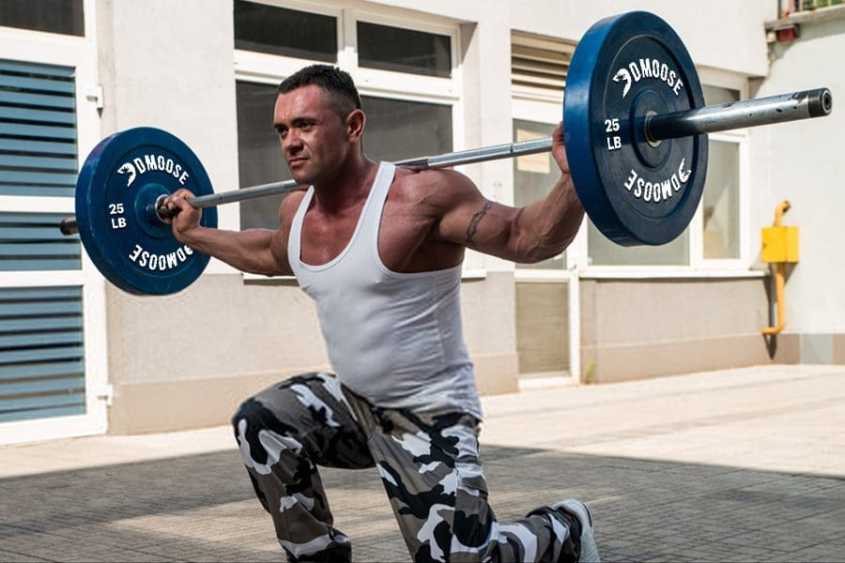
Barbell Walking Lunges with Bumper Plates

  • Hold barbell overhead.
  • Lunge. In order of ascending difficulty, you can go backward, forward, or, heck, sideways–exerciser’s choice.
  • You have many options for changing it up. Holding one or two bumpers or kettlebells in each hand is an option. The single-arm version allows you to hold the object in one hand, which places more emphasis on your core.

You can even try some other workouts without barbells, like plate curl, pate push-ups, front shoulder raise, plate planks, and more. They can be unique for your training program bringing some change for increased motivation. But, everything depends on the correct selection of bumper plate so it can be comfortable a reliable for you and your training.

Shop Bumper Plates >>


Buying Tips and Traps to Avoid

Bumper plates are usually common for Olympic weightlifting. But buying them for your home gym is never a bad decision. They are good for many reasons and training types. But getting the right one matters the most, especially for newbies. Here are some tips to help you buy the best one for your home gym without getting into the trap:

Material

The popularity of these bumper plates is increasing day by day, due to which the manufacturers are doing different things to bring the cots down. Look for high-quality urethane bumper plates. They are odor-free, reliable, and flexible. Some manufacturers use low-quality rubber or urethane while adding cast iron core. So, check the purity of the material before buying.

Weight Accuracy

The stated weight should match the weight of the bumper plates. A slight difference is tolerable. But a weight variance of 3% or higher is not good.

Warranty

You should not buy a product for your gym without a warranty. Every good-quality bumper plate comes with a warranty. And that is what you deserve as a buyer.

Width & Diameter

The width and diameter of the plates should meet the IWF standards to avoid inconvenience. 450mm diameter and 50.4 mm collar opening is recommended for bumper plates, and they should be close to these values.

Color Coding Accuracy

Usually, black bumper plates are better to buy as a standard code, but you can look for various even colors. The only thing is that they should match the IWF standards.

Printed or Raised Letter

We usually see printed weight indications, but they fade away with time. So, if it’s possible, buy the ones with raised letters.

Steel Hub

Most of the trainers prefer steel hubs and not brass ones. Stainless steel with chrome or zinc plating is a fine option for reliable bumper plates.

Drop Test

Drop test is getting common; reputed manufacturers will have drop test data on the website. You should check for the maximum number of drops to get an idea.

DMOOSE brings you top-quality bumper plates to challenge your weight training, bodybuilding, strength training, Olympic lifting, and powerlifting routines. The most important thing about bumper plates is the quality construction. And here, you get the most durable and reliable bumper plates.

These long-lasting plates will stay silent while not bouncing back too much. The standard diameter matches the IWF standard so that you don’t face any inconvenience. Its 2-inch opening is suitable for the Olympic barbell.

Moreover, they are safe and stable to be used even in small spaces. Therefore, these exceptional bumper plates are what you need for your home gym. You don’t have to think twice while buying your home gym equipment from here.

Shop Bumper Plates >>


Conclusion

Choosing the right bumper plates for your home gym can be challenging. But you can make it easier by understanding the purpose. Once you know everything about bumper plates, you will be aware of the available options. It is vital to focus on the requirements to get the best one for your gym.

Don’t forget to keep the essential tips and factors in your mind before purchasing to meet the standards. Moreover, buying from reputed manufacture should be the only choice to avoid inconveniences. Bumper plates can be a great addition to your home gym; if chosen correctly. Throw some weight around your gym with the help of your favorite bumper plates and enjoy your training journey.

Strength Training Programs >>

More Articles >>

How to Create the Perfect Powerlifting Home Gym

If you are a bodybuilder or a powerlifter, it is important for you to workout on a regular basis so that you can achieve your strength goals easily. But when you are unable to go to the gym due to lockdown or any other restrictions, you have the option for creating a home gym for yourself. In this way you will not have to worry about going to the gym everyday because you can work out or do exercise in the comfort of your home. Therefore, if you want to enjoy a large number of benefits, it is important for you to know how to create the perfect powerlifting home gym!

This is especially very beneficial when you have extra space in your home so that it can be turned into a gym where you will spend quality time while powerlifting. But for this you will need to buy the best quality powerlifting equipment as it will help you in performing workouts at home effectively. This is the best way of building body strength because the right kind of equipment is very important as it helps you in making real progress so that you will get the best fitness results.

What You Need

There are different things that you will need to keep in mind when you are creating the perfect powerlifting home gym. But the most important thing is to have a good setup for the main power lifts; the bench press, squat and deadlift. These three exercises are the most important for making real progress. But if you don’t have enough funds for the purchase of these gym equipment, you can always invest in used gym equipment. It will help you save a lot of money in the long run.

You will need these basic equipment for your home gym because it enables you to perform these lifts along with assisting you to strengthen these lifts. Moreover, you will get immense benefits from powerlifting as it helps you to attain raw strength so that you can perform even the most difficult physical activities.

The valuable addition of the used gym equipment is extremely important in helping you achieve your goals so that you will be able to get the best kind of results. Plus, you will get this equipment for a discount making for a great budget friendly option for your home gym. And you will no longer have to wait at commercial gyms for your turn to use any particular equipment when you have set up your own home gym.

Benefits of a Powerlifting Home Gym

There are many benefits to having your own powerlifting home gym. For one, you can workout anytime you want at your own pace, without leaving the comfort of your own home. And you never have to wait on others to get done using the rack before you can use it. That alone will help to save you a lot on gas and time.

On top of that, you can squat, bench and deadlift any and every day you want too! If you need a some guidance, check out our Strength Programs.

Conclusion

Therefore, if you are interested in enjoying all these benefits, then you should make use of used gym equipment while making your powerlifting home gym. It will offer immense benefits to your time and body.

More Articles >>

Core Stabilization is Key to Success in Sports Athletes

Every professional athlete understands the importance of central core stabilization. And while some still underestimate its impact on one’s exercise effectiveness, more and more people start to implement core training into their workout routine. Ask any famous professional coach like Lucas James, and they will tell you that you will not get anywhere if you do not take care of your central stabilization.

Why is that? We will discuss it in a minute. Below, you will find all the information regarding central core stabilization, how it is essential to success in sport, and the best core exercises to add to your training routine. Read on and see for yourself how to take your workouts to the next level.

Definition of Core Stabilization

Core stability can be defined as an ability to control your body position and motion of the trunk over the pelvis and leg. That allows optimum power generation, distribution, and control of force and motion along the kinetic chain.

Central stability comes in handy, especially during the rotational movements, which are
required in almost any sport. In other words, every time you swing a tennis racket, shoot a football, throw a handball, or turn when skiing, it is your core stability that allows you to do it effectively.

That is not all, though. Strong central stability also allows athletes to hold their body
positions for an extended time. For instance, if you are a swimmer, your core is vital for you to maintain your hydrodynamic line in the pool. The same goes for runners, who require a strong core to maximize their power output.

Central Stabilization & Injury Prevention

Athletic performance is one thing. However, as mentioned in the title, there is much more to central stability than meets the eye. Whether you are an athlete or not, core stability plays a significant role in injury prevention.

Focusing on central core strength will help you stabilize injury-prone body areas and
rehabilitate lower limb injuries. That is because when the core is weak, an athlete starts
overusing other muscle groups in order to generate the force and movement they want. That puts more strain on muscles and joints, increasing the risk of injuring them.

For example, various researches have discovered that knee injuries are usually associated with weak hip muscles. Those force athletes to shift weight from their trunks to their knees, making them more prone to tearing. Because of that, a majority of conditioning and rehabilitation programs have started to emphasize hip strengthening and central stabilization.

Best Exercises to Strengthen Your Core Stability

Now that we have discussed how central core stabilization works and why it is the key to success in sport, it is time to show you what you can do to strengthen your core and improve its stability. Let’s take a look at some of the best exercises you can incorporate into your training routine:

1 – Marching Hip Bridge

This exercise focuses on lumbo-pelvic stability. To perform it, lay on your back with hands placed by your side. Then, lift your hips to the bridge position. Next, lift the right foot off the floor to 90 degrees at the hip and knee. Return the foot to the floor and do the same thing using your left foot. Repeat it 20 times while keeping the hips lifted and maintaining a neutral pelvis.

2 – Supine Toe Taps

Supine toe taps is a perfect exercise for core stability. Lie on your back on the floor with your arms by the side. Engage the abdominal muscles and draw the navel toward the spine.

Then, lift your knees to 90 degrees, and on a two-count, lower your right foot to touch the floor. Perform the same thing with your left foot, and repeat it 10 times.

3 – Plank With Torso Rotation

This one focuses mostly on core strength and shoulder stability. Position yourself into the traditional forearm plank. Then, lift the top arm over your chest and use your rib cage to rotate your body and draw your hand underneath the ribs. Repeat it 10 times and change sides.

Final Thoughts on Core Stabilization in Athletes

As you can see for yourself, central core stabilization is vital for improving your athletic performance. Moreover, even if you are not a professional athlete, maintaining a strong core will spare you a lot of trouble with potential injuries. With that in mind, make sure to implement the exercises provided above into your training. Also, remember that there are many more core stabilization exercises. We have merely scratched the surface.

For more information, we recommend contacting a professional physical therapist. They will tell you everything you need to know about strengthening your core. Then, contact a coach who will ensure you do all the exercises correctly. Central stabilization is not something you should underestimate, so it is vital to make sure you do everything the right way. Otherwise, you risk severe injuries.

Get a Program >>

More Articles >>